Salmon Pink
Primary visual colorWhere Is Lake MacDonnell?
South Australia · Australia
Drag or zoom the real map. Verified shoreline geometry is highlighted with the lake’s LakeColors palette color when available.
Lake MacDonnell on the Globe
Rotate the world or focus directly on the lake.
Pink, Green and Blue Along the Causeway
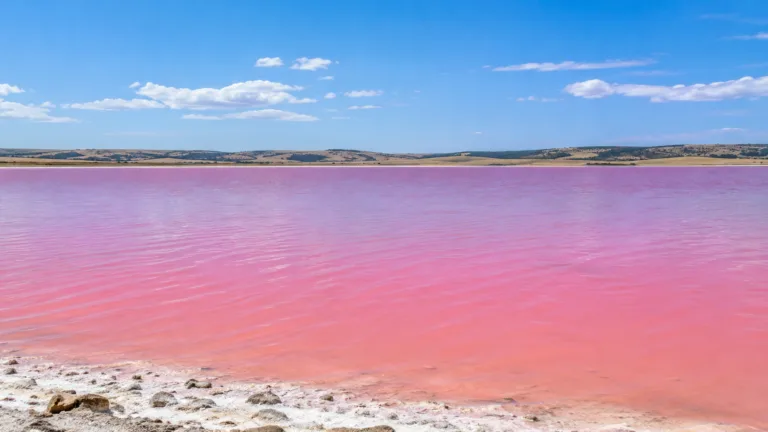
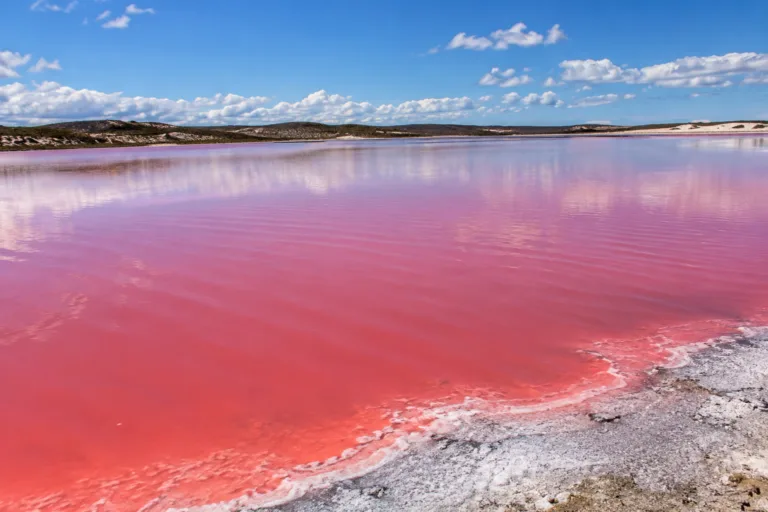
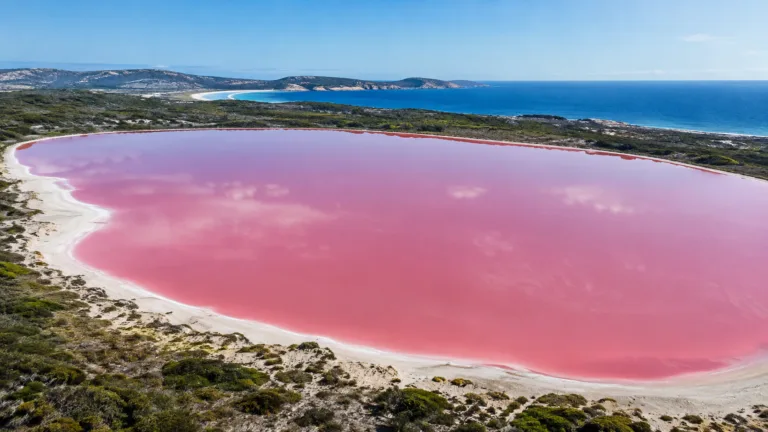
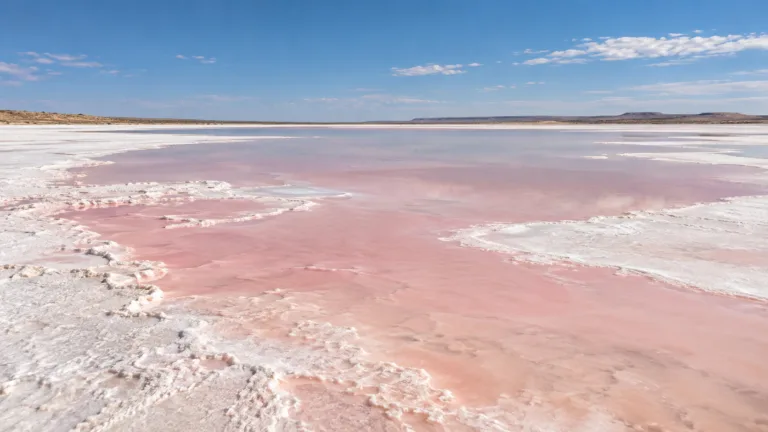
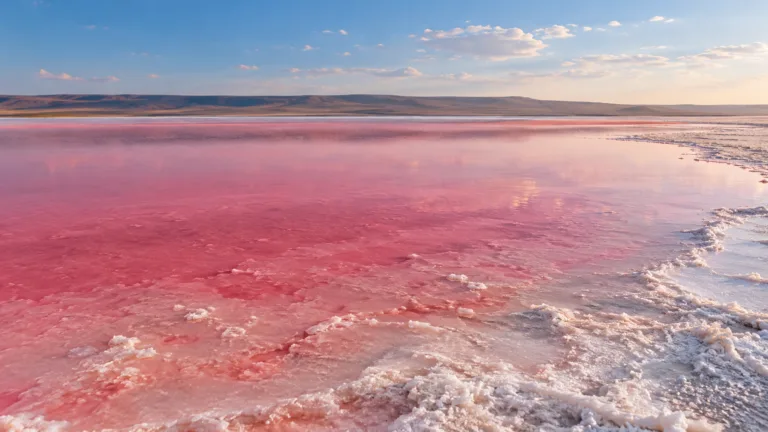
The high-salinity water can develop the salmon-pink appearance for which Lake MacDonnell is known.
The official Lake MacDonnell listing identifies the water immediately on the other side of the causeway as Green Lake.
Blue Lake is identified farther along the same road corridor beyond the small bridge.
Causeway Color Profile
When the Pink Side Is Most Vivid
How the Pink Brine Gets Its Color
Why the Pink Is Not Permanent
Value: Pink vibrancy depends on water level
Provenance: Official Description
Evidence: High
Value: No fixed Lake MacDonnell water-level threshold for turning pink is published in the cited sources
Provenance: Interpreted
Evidence: Limited
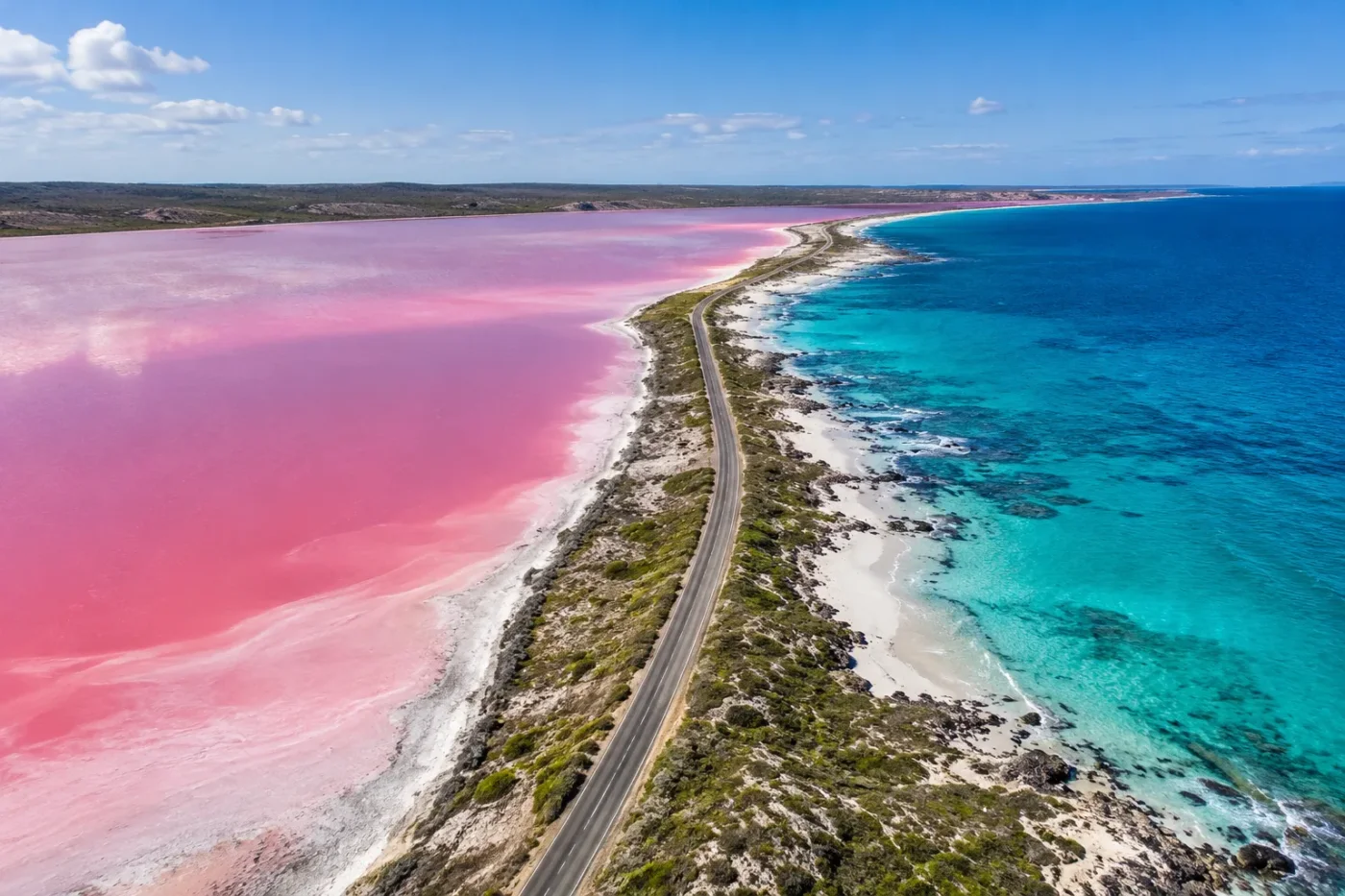
Lake MacDonnell is known for the sharp roadside contrast between intensely pink saline water and adjacent blue-green water near Penong in South Australia. The pink is associated with very high salinity and pigmented salt-loving microorganisms, while the strength of the color changes with water conditions. The familiar “pink versus blue” description is visually useful, but the actual layout along the causeway is slightly more complex.
The Famous Pink-vs-Blue View Simplifies Three Color Zones
Photographs often frame Lake MacDonnell as two waters separated by a narrow road: pink on one side and blue or blue-green on the other. South Australia’s official Lake MacDonnell description is more specific. It identifies Pink Lake on one side of the causeway, Green Lake on the other side, and Blue Lake farther along beyond a small bridge.
That distinction explains why different photographs appear to disagree about the color opposite the pink water. Camera position, the section of road being photographed and changing optical conditions can produce a pink-and-green composition in one image and the better-known pink-and-blue composition in another. The color contrast is real; the shorthand description simply compresses several neighboring water areas into one visual idea.
The Pink Comes from a Salty Microbial System, Not Pink Minerals
The surrounding landscape is rich in salt and gypsum, but the visible pink water should not be explained simply as dissolved pink mineral material. South Australia’s Lake MacDonnell information attributes the coloration to the salt-loving microalga Dunaliella salina together with halophilic microorganisms associated with red carotenoid pigments.
This mechanism fits the broader science of highly saline lakes and salt-production ponds. Dunaliella can accumulate large quantities of beta-carotene, while members of the Halobacteria group contain red-pink carotenoids such as bacterioruberin. When pigment-rich microorganisms become sufficiently abundant, their combined optical effect can color an entire brine surface pink, red or orange.
Calling the color “an algae bloom” alone is incomplete. Scientific work on red brines shows that both carotenoid-rich Dunaliella and pigmented halophilic archaea can contribute, and in some hypersaline systems the archaeal community can dominate the visible water color even when algal beta-carotene is abundant.
Why the Water Across the Road Is Not Equally Pink
The striking photograph can suggest that a road alone causes one side to turn pink while the other stays blue. The available Lake MacDonnell sources do not support such a simple cause-and-effect claim. They document different colored waters along the causeway and explain the biological origin of the pink side, but they do not provide paired measurements of salinity, microbial abundance, pigment concentration or water chemistry from the pink and blue-green sides.
In hypersaline systems generally, differences in salinity and microbial communities can create strong color boundaries between neighboring brines. Lake MacDonnell belongs to a landscape where solar evaporation is also used for salt production, so water bodies and brines can occupy different hydrological and salinity states. That general mechanism is scientifically plausible here, but an exact chemical explanation for the blue-green side should not be presented as if it has been directly measured at the photographed causeway.
The pink mechanism is well supported. The precise reason that the neighboring water remains green or blue is less specifically documented for Lake MacDonnell. A side-by-side chemical comparison should therefore be treated separately from the verified visual color description.
Summer Favors the Pink Display, but There Is No Guaranteed Pink Day
South Australia’s current pink-lake guidance identifies summer as Lake MacDonnell’s peak pink period and associates the seasonal display with summertime algal activity. This is consistent with the behavior of many saline systems, where strong evaporation can concentrate brine and favor pigment-rich halophilic communities.
The official Lake MacDonnell listing adds an important limitation: the lake is not always pink, and its color vibrancy depends on water level. A seasonal recommendation therefore describes probability rather than a fixed annual switch. No cited source gives a Lake MacDonnell-specific salinity threshold, water depth or exact date at which the water becomes pink.
Lighting also changes what a visitor or camera records. The official description specifically refers to a salmon-pink impression on clear days, so atmospheric conditions and reflected light can strengthen or weaken the apparent contrast even without a fundamental change in the organisms producing the pigment.
Evaporation Connects Lake MacDonnell’s Color and Salt Landscape
Lake MacDonnell is also part of a long-established mineral and salt-production landscape. South Australia’s Energy & Mining information describes salt production here by solar evaporation of brine that enters the shallow lake through porous coastal dunes or is supplied from nearby gypsum operations. Historically, crystallising pans have formed part of that production system.
This context matters for interpreting the color without confusing its causes. Evaporation increases salt concentration, and extreme salinity creates ecological conditions in which a relatively small group of salt-tolerant microorganisms can dominate. The pink pigment is biological; the saline setting that permits those organisms to flourish is controlled by water and salt balance.
The result is unusually easy to see at Lake MacDonnell because differently colored waters occur within the same narrow road corridor. Pink, green and blue are not three permanent paint-like properties of the lake. They are visible states produced by distinct waters, microorganisms, salinity, water level and optical conditions within the same highly saline landscape.
Sources