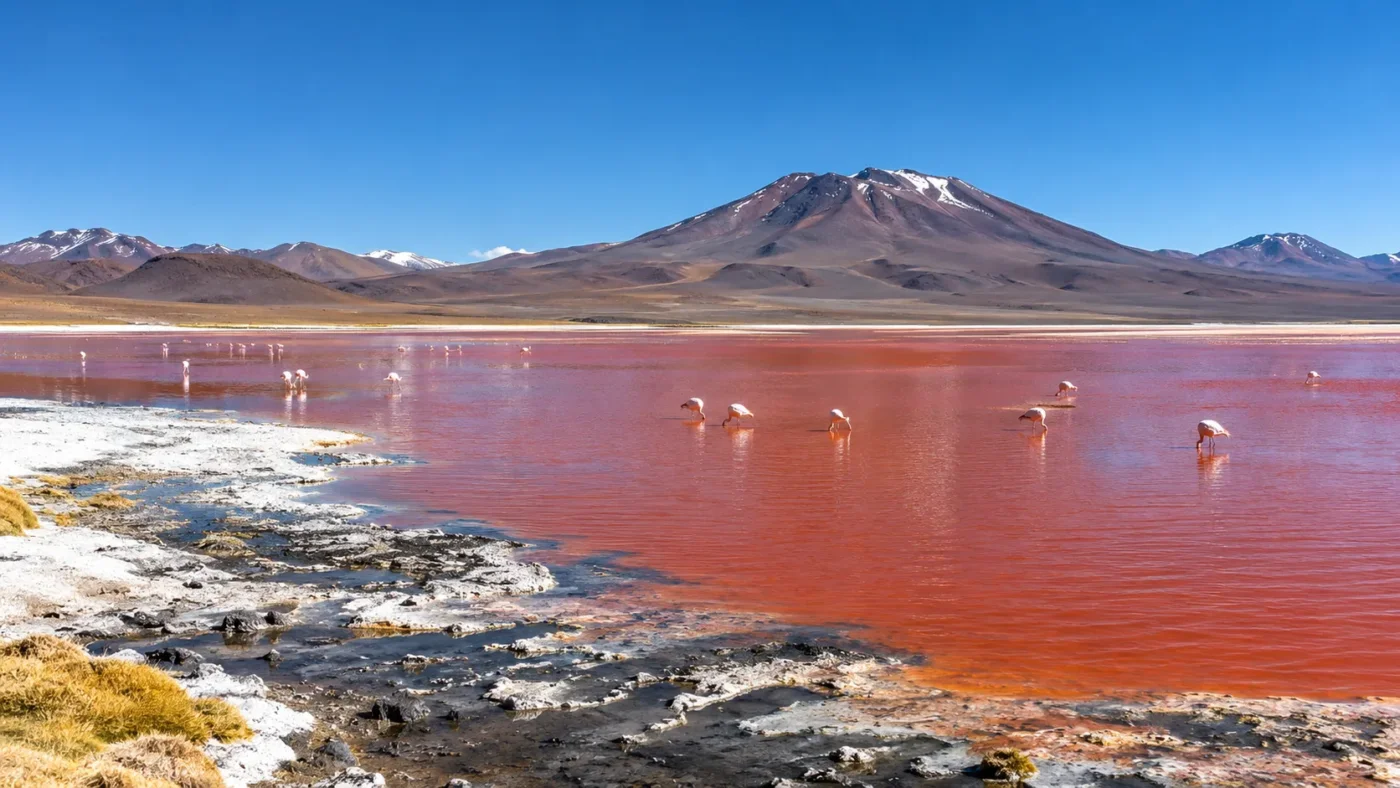
Red-Brown
Primary visual colorWhere Is Laguna Colorada?
Potosí Department · Bolivia
Drag or zoom the real map. Verified shoreline geometry is highlighted with the lake’s LakeColors palette color when available.
Laguna Colorada on the Globe
Rotate the world or focus directly on the lake.
Why the 2026 Sentinel-2 Scene Looks Blue and Brown
25 August 2026ESA's published Sentinel-2 scene uses false-colour near-infrared processing. In that image Laguna Colorada appears blue and brown even though ESA describes the water as red to the naked eye.
Value: Red
Value: Blue and brown
Value: Near-infrared false-colour processing
Evidence Behind the Color Profile
Claim-level supportNASA describes a strong red-brown appearance and notes occasional green phases linked to changes in salinity, temperature and algal type.
NASA Earth Observatory — Laguna ColoradaEvidence: HighThe Ramsar profile and the Bolivian ecology study describe color contributions from fine sediments and microorganisms, with pronounced short-term changes.
Ramsar Convention — Information Sheet on Laguna ColoradaRevista Boliviana de Ecología y Conservación Ambiental — Flamingo Population Fluctuations at Laguna ColoradaEvidence: HighA 2026 metagenomic study links the lake's red coloration to dense pigmented plankton and photosynthetic microorganisms and documents diverse halophilic communities.
Environmental Microbiome — Microbial Diversity in Central Dry Andes Saline LakesEvidence: HighThe 1997 ecological study reports surface freezing during the harsh cold season and especially low temperatures in July and August.
Revista Boliviana de Ecología y Conservación Ambiental — Flamingo Population Fluctuations at Laguna ColoradaEvidence: ModerateLaguna Colorada is most reliably described as a red to red-brown saline lake, but it is not locked to one shade. Official and scientific sources document red-orange and purple-toned states, occasional green phases, and pronounced short-term variation. Its color comes from pigmented microorganisms working alongside fine colored sediments, so explanations that credit only minerals or only one alga leave out part of the evidence.
The Red Water Has More Than One Color Source
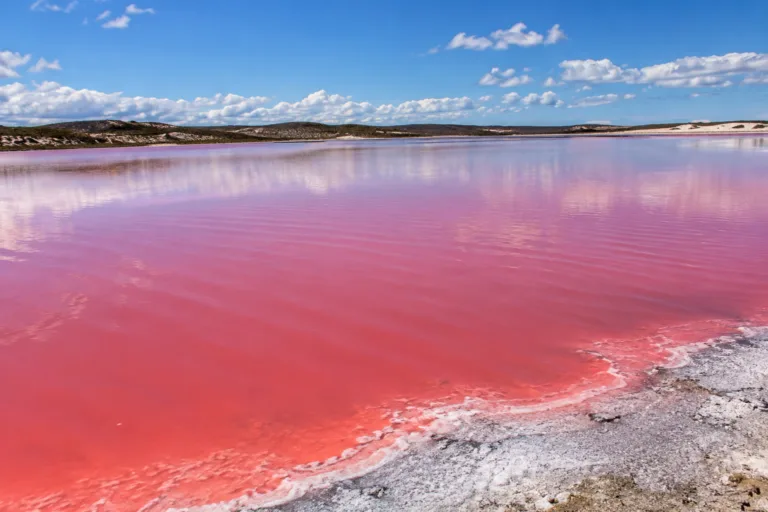
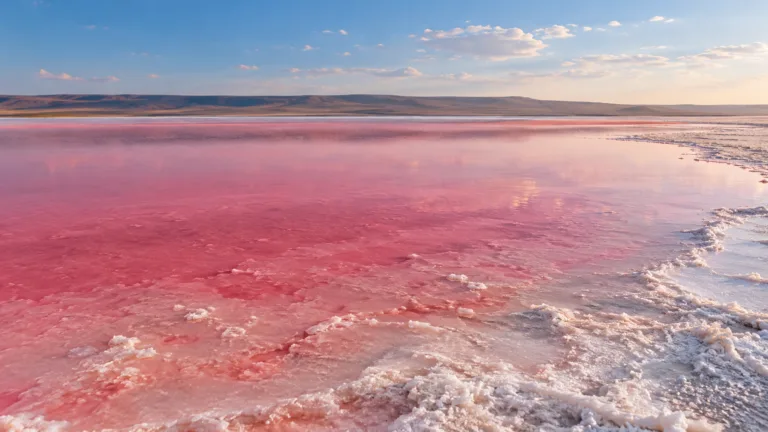
NASA describes the lake’s strong red-brown appearance as being produced by algae that thrive in salty water, while the Ramsar wetland record adds another part of the picture: fine sediments in a reddish-yellow to purple color range occur together with a dense population of salt-tolerant microorganisms. A 2026 peer-reviewed microbial study also describes the red coloration as associated with dense pigmented plankton and photosynthetic microorganisms adapted to hypersaline, alkaline water.
Those sources point to a mixed system rather than a single dye-like substance dissolved in the lake. Biological pigments can dominate the visible impression, while colored mineral and sediment material contributes its own tones. The result is a water surface that may look red-brown, red-orange, brick red, purple-tinted, or, under different biological conditions, green.
Laguna Colorada’s red appearance should not be reduced to one mineral or one organism. The best-supported explanation combines pigmented microbial life with colored fine sediments, with salinity, temperature and solar radiation influencing how strongly those components affect the visible water color.
Older Dunaliella Records and Newer Microbial Data Describe Different Snapshots
Older ecological descriptions give Dunaliella salina a prominent role. The Ramsar information sheet, drawing on earlier Bolivian research, links the lake’s reddish-yellow to purple appearance to fine sediments and a dense population of this flagellated alga. The 1997 Bolivian ecology study likewise describes water commonly ranging from red-orange toward purple and discusses changes in algal blooms during the day.
The 2026 metagenomic study does not present Laguna Colorada as a one-species system. Its sampling found a broader microbial community, including halophilic archaea and several phototrophic groups; the algal assemblage at Laguna Colorada included Micromonas, Chlamydomonas, and Chlorella. That newer result does not automatically cancel the older Dunaliella observations. The studies were separated by decades, used different methods, and sampled different parts of the microbial community.
“Dunaliella makes the lake red” is useful as a short historical explanation, but it is too narrow as a full description of the present evidence. Laguna Colorada is better understood as a hypersaline microbial system in which the visible color can reflect changing communities and pigments as well as sediment.
The Lake Can Shift Color Within a Day
The Ramsar record says the water color can vary greatly during the day. It links those short-term shifts to changes in water temperature and solar radiation and reports that cyanobacterial blooms can intensify the visible tone toward purple or brick red. That matters because photographs taken only hours apart do not necessarily show a seasonal change.
NASA adds a second kind of variability: the lake sometimes enters green phases. Its explanation connects these changes to different algae favored by changing salinity and temperature. ESA’s 2026 Earth-observation description also notes that the lagoon’s composition varies with the seasons while the water appears red to the naked eye.
What the published record does not provide is a reliable recurring color assigned to every month. A green phase cannot be placed in a specific month simply because green has been documented, and one red April image cannot be treated as proof that every April has the same appearance.
A Satellite Image Can Show a Color the Eye Would Not See
ESA published a Copernicus Sentinel-2 view acquired on 25 August 2026 in which Laguna Colorada appears as a mix of blue and brown. That is not evidence that the lake had stopped being a red lake. The image is a false-colour product using near-infrared data, so its displayed colors are chosen to reveal surface properties rather than reproduce natural human vision.
ESA explicitly distinguishes the processed satellite colors from the lake’s naked-eye appearance, which it describes as red. For lake-color research, this is an important separation: a remote-sensing image can be scientifically useful while displaying colors that should not be entered into a visual palette as if they were what a person would see at the shore.
Blue or brown in a processed satellite scene is not automatically a real water-color phase. The sensor bands and display method must be checked before treating satellite imagery as evidence of visible lake color.
Winter Ice Can Hide the Open-Water Color
A 1997 ecological study of Laguna Colorada reports that the harsh cold period runs from roughly May through August and that the lake surface can freeze during the coldest conditions. The same study identifies July and August as especially cold months. This is a surface-state change, not evidence that the water itself chemically turns white or blue in winter.
That distinction is useful when comparing photographs across the year. Open red-brown water, partial ice, exposed pale mineral deposits, and snow can occupy the same scene, yet they represent different materials. The lake’s color profile therefore needs to separate the color of liquid water from temporary ice and surrounding evaporite surfaces.
Sources
- European Space Agency — Earth from Space: Laguna Colorada
- NASA Earth Observatory — Laguna Colorada
- Ramsar Convention — Information Sheet on Laguna Colorada
- Environmental Microbiome — Microbial Diversity in Central Dry Andes Saline Lakes
- Revista Boliviana de Ecología y Conservación Ambiental — Flamingo Population Fluctuations at Laguna Colorada
- OpenStreetMap — Laguna Colorada Shoreline Feature