Deep Blue
Primary visual colorWhere Is Pangong Tso (Bangong Co)?
Ladakh / Tibet Autonomous Region · India / China
Drag or zoom the real map. Verified shoreline geometry is highlighted with the lake’s LakeColors palette color when available.
Pangong Tso (Bangong Co) on the Globe
Rotate the world or focus directly on the lake.
A Real East–West Salinity Gradient
Value: Low-salinity / freshwater end member
Recent measurements reported about 0.5 g/L salinity in 2017 and 0.47 g/L in 2021 in the eastern sector.
Provenance: Measured
Evidence: High
Value: More saline
The lake becomes more saline toward the west, including the Ladakh side. This spatial hydrochemistry should not be confused with rapid light-driven color changes.
Provenance: Peer Reviewed
Evidence: High
Eastern-Basin Measurements That Matter for Color
Documented measurement dataMeasured in the eastern Bangong Co sector; high transparency is consistent with a clear-water optical setting.
Low measured chlorophyll at the cited eastern-basin site means a green appearance should not automatically be read as an algal bloom.
Reported for the eastern sector in the same study context.
Open Water, Freeze-Up and Ice Breakup
What the Evidence Supports
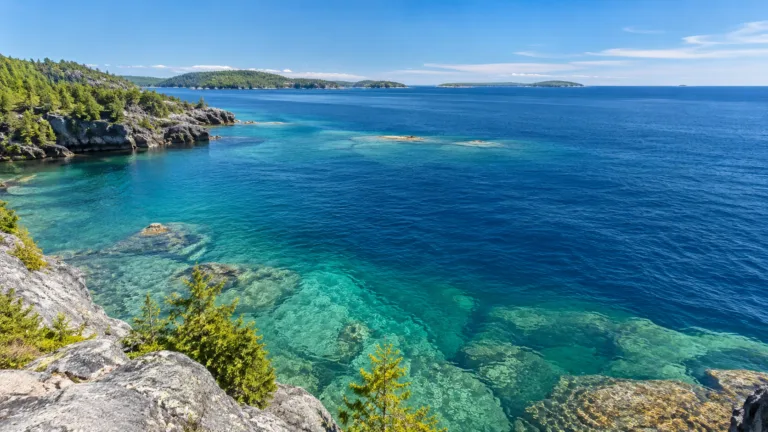
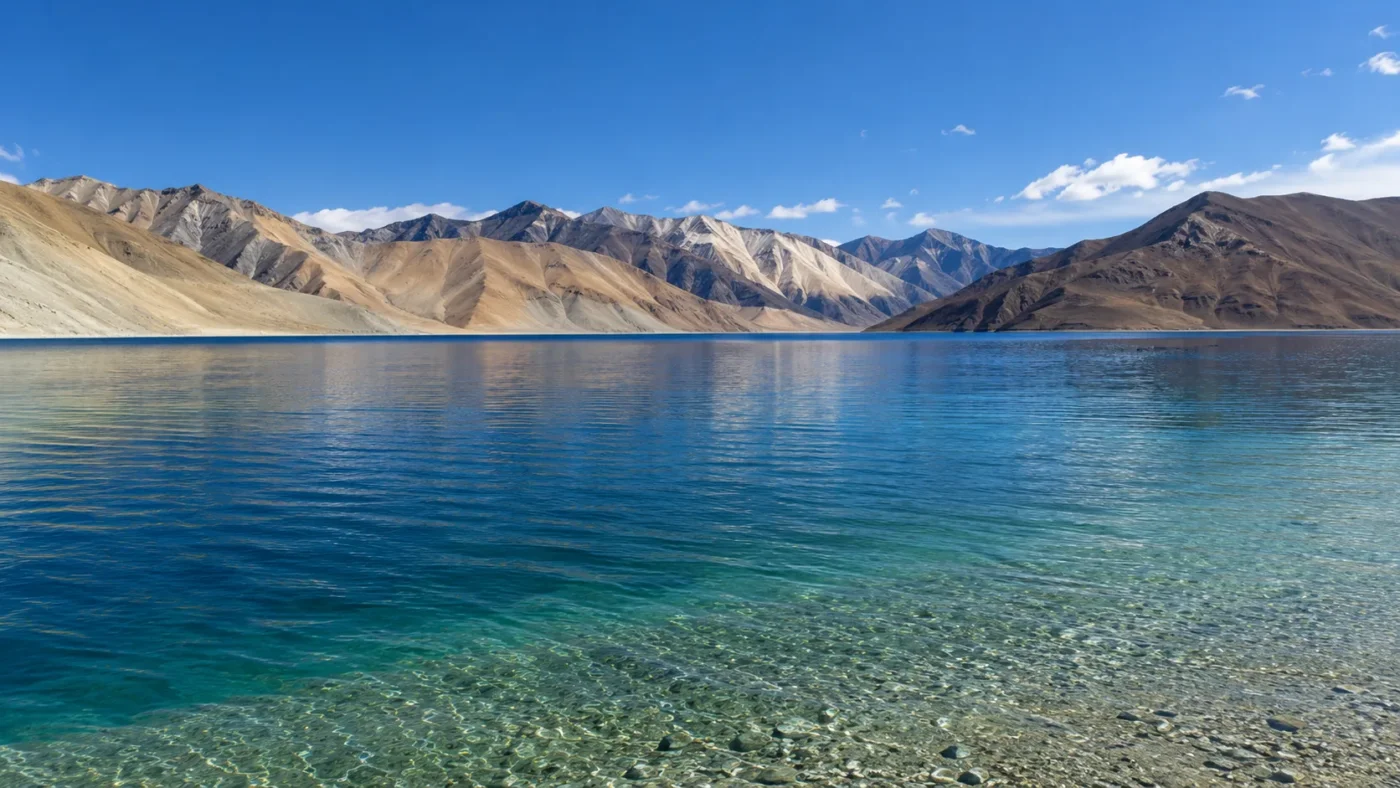
Pangong Tso can appear deep blue, blue-green or green within the same open-water period, while cloudier or shadowed conditions can mute the surface toward gray or silver. The strongest evidence points to changes in apparent color rather than repeated rapid changes in the lake’s chemistry: sunlight, the color of the sky, surface reflection, viewing geometry and the optical properties of the water all affect which wavelengths reach an observer. Pangong Tso also has a genuine east-to-west salinity gradient, but that spatial chemical pattern should not be treated as a simple switch that turns the lake blue, green or gray during the day.
The Fastest Color Changes Happen in the Light Path
The official Ladakh Tourism description calls Pangong Tso an ever-changing lake whose colors shift from deep blue toward green and gold with changing light. That wording captures an important distinction: a lake can look different even when the composition of the water has not changed on the same timescale.
Natural-water color is produced by two overlapping signals. Some light is reflected from the surface, including light from the sky and clouds. Some enters the water, where particular wavelengths are absorbed or scattered before part of the light travels back toward the observer. The balance changes with solar angle, cloud cover and viewing direction, so two photographs taken from the same shoreline can record noticeably different colors without requiring a major chemical event between them.
A blue photograph and a green photograph do not by themselves demonstrate that Pangong Tso underwent a chemical transition. Direct attribution would require simultaneous optical and water-quality measurements. The available evidence strongly documents the visual color range, but does not establish a fixed hourly chemical cycle behind it.
Why Clear Pangong Water Can Look Intensely Blue
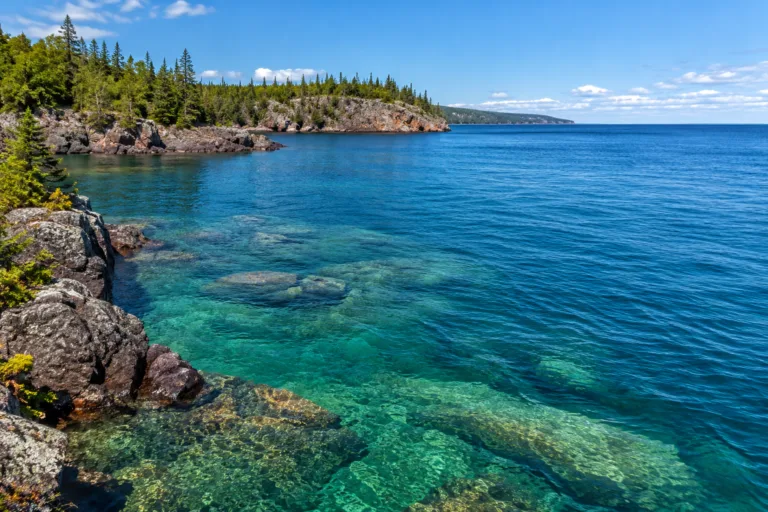
The blue appearance of clear water is not explained solely by reflection of a blue sky. Water itself absorbs light unevenly across the visible spectrum. Longer red wavelengths are absorbed more strongly, so a sufficiently long path through relatively clear water favors the return of blue and blue-green light.
This mechanism is especially relevant to Pangong Tso because modern measurements from the eastern Bangong Co sector describe a highly transparent, low-chlorophyll water column. That does not mean every part of the transboundary lake has identical optical properties, but it provides direct evidence that at least one major sector can have the kind of clear-water setting in which strong blue coloration is expected.
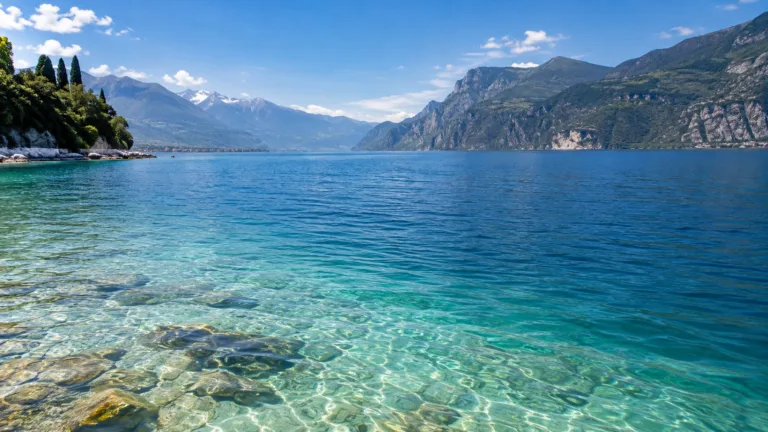
Sky reflection can intensify or modify that appearance. Under a clear blue sky, reflected skylight and the water-column signal can reinforce a blue visual impression. The exact shade still depends on the observer’s angle, the depth of the light path through the water and the materials suspended or dissolved in it.
Green Water at Pangong Does Not Automatically Mean an Algal Bloom
Green is a documented visual state at Pangong Tso, but a green lake surface should not automatically be interpreted as evidence of heavy algal growth. In lakes generally, chlorophyll can shift reflected light toward green, but particles, dissolved substances, shallow-water effects and illumination can also change the blue-to-green balance.
The distinction matters here because measured chlorophyll-a in the eastern sector has been low while water transparency has been high. Those measurements were not taken during every green-looking event and cannot explain every part of the lake, yet they show why the shortcut green water = algal bloom is too simple for Pangong.
No peer-reviewed Pangong color study cited here provides a one-to-one rule in which a particular chlorophyll concentration, mineral concentration or salinity value creates the green phase seen by visitors. Green is therefore best treated as a real observed color variant whose immediate cause can involve several optical controls rather than one proven substance.
Gray Is Better Understood as a Reflection-Dominated State
Gray or silver Pangong is different from the better-documented deep-blue and green states. It is most useful to interpret gray as an apparent surface color, especially when cloud cover, mountain shadow or diffuse illumination reduces the intense blue signal seen under clear conditions.
Water surfaces can reflect the color and brightness of the sky, while the contribution from light emerging from the water changes with observation geometry. A bright overcast sky can therefore produce a pale silver surface, while darker cloud or mountain shadow can suppress color contrast and make the same water appear steel-gray or muted blue-gray.
This does not mean the water itself suddenly contains a new gray pigment. A true chemical color change would require a change in optically active material within the water column and would need direct measurements to demonstrate it.
Pangong’s Salinity Changes Across the Lake, Not Every Time Its Color Changes
Pangong Tso is often described simply as a saltwater or brackish lake, but its hydrochemistry is more unusual than that label suggests. Scientific work on Bangong Co documents a pronounced east-to-west gradient: the eastern sector is much fresher, while salinity increases toward the western end in Ladakh.
The gradient develops across the lake’s long, narrow basin and is connected to its endorheic hydrology and freshwater inflows. Because there is no outlet carrying dissolved salts away from the system, water balance and evaporation have helped produce strong spatial differences in salinity.
That pattern is important for understanding Pangong’s ecology, but it should not be confused with the fast visual color shifts visible from one shoreline. The salinity gradient is primarily a geographic difference across the lake; blue-to-green changes that occur as light conditions change can happen much faster than the basin’s salinity structure could reorganize.
Descriptions of Pangong Tso sometimes attribute every color change to “minerals in the water.” Dissolved salts and suspended mineral particles can affect natural-water optics, but the cited Pangong evidence does not establish a single mineral concentration that switches the lake among blue, green and gray. Illumination and apparent-color effects must also be considered.
Winter Replaces the Open-Water Palette With Ice
Pangong Tso’s strongest annual visual transition is not a predictable change from one liquid-water color to another. It is the formation and loss of lake ice. Observational and remote-sensing studies of Bangong Co show a long cold-season ice period, although the exact freeze-up and breakup dates vary by year and by the method used to identify ice.
Detailed observations for 2012–2013 placed freeze-up during December and breakup during April, with open water returning around late April to early May. Other long-term descriptions place the broader ice-covered season from roughly late autumn into April. This variability is why a fixed annual date should not be assigned to freezing or thawing.
Once ice and snow dominate the surface, the open-water blue-green mechanism is partly hidden. The visible surface can instead range through white, pale blue, gray and darker ice tones depending on snow cover, ice structure, trapped material, cracks and illumination. Those winter appearances should be classified separately from the open-water color palette.
There Is No Verified Hour-by-Hour Pangong Color Schedule
Pangong Tso is frequently described as changing color several times in a day. The general phenomenon is well supported: official sources document changing blues and greens and explicitly connect the shifts with light. What is not established is a universal schedule such as “blue in the morning, green at noon and gray in the evening” that repeats reliably every day.
Cloud movement alone can interrupt such a schedule. Solar angle changes continuously, shadows from surrounding mountains shift, and surface reflection varies with viewing direction. A color seen at one shoreline also does not necessarily represent the entire lake, which stretches across a long basin with different depths, inflows and water chemistry.
The same caution applies to claims that the lake changes a specific number of times per day. Without continuous calibrated color measurements, such numbers are descriptive travel language rather than a scientific property of Pangong Tso.
What a Direct Pangong Color Study Would Need to Measure
A definitive test of the blue-green-gray sequence would require measurements taken at the same place and time as each observed color state. Calibrated above-water spectral reflectance could identify how much blue, green and red light actually leaves the water. Simultaneous measurements of sky irradiance would help separate the water-column signal from changing sky reflection.
Water samples would then need to track chlorophyll-a, suspended sediment, colored dissolved material, salinity and other optically active constituents. Depth, solar angle, cloud cover and surface conditions would also have to be recorded. That combination could determine whether a particular shift was caused mainly by illumination, by changing material in the water, or by both.
Until such Pangong-specific measurements connect individual visible colors to simultaneous optical and chemical observations, the most defensible interpretation is layered: deep blue and green are documented open-water appearances; changing light is a major driver; the lake’s clear-water characteristics and dissolved or suspended constituents shape the underlying optical response; and gray-silver is primarily a conditional apparent-color state rather than a demonstrated chemical phase.
Sources
- Ladakh Tourism — Pangong Tso
- Communications Earth & Environment — Bangong Co alpine aquatic ecosystem study (2026)
- U.S. Geological Survey — Water Color
- Hydrological Sciences Journal — Changes in the lake thermal and mixing dynamics on the Tibetan Plateau
- Sensors — Analysis of Ice Phenology of Middle and Large Lakes on the Tibetan Plateau