Blue
Primary visual colorWhere Is Lake Tikitapu / Blue Lake?
Bay of Plenty · New Zealand
Drag or zoom the real map. Verified shoreline geometry is highlighted with the lake’s LakeColors palette color when available.
Lake Tikitapu / Blue Lake on the Globe
Rotate the world or focus directly on the lake.
Blue Tikitapu Beside Green Rotokākahi
How the Blue Appearance Is Produced
Color Through the Year
Blue Is the Stable Visual Identity
Measured Clarity and Algal Biomass
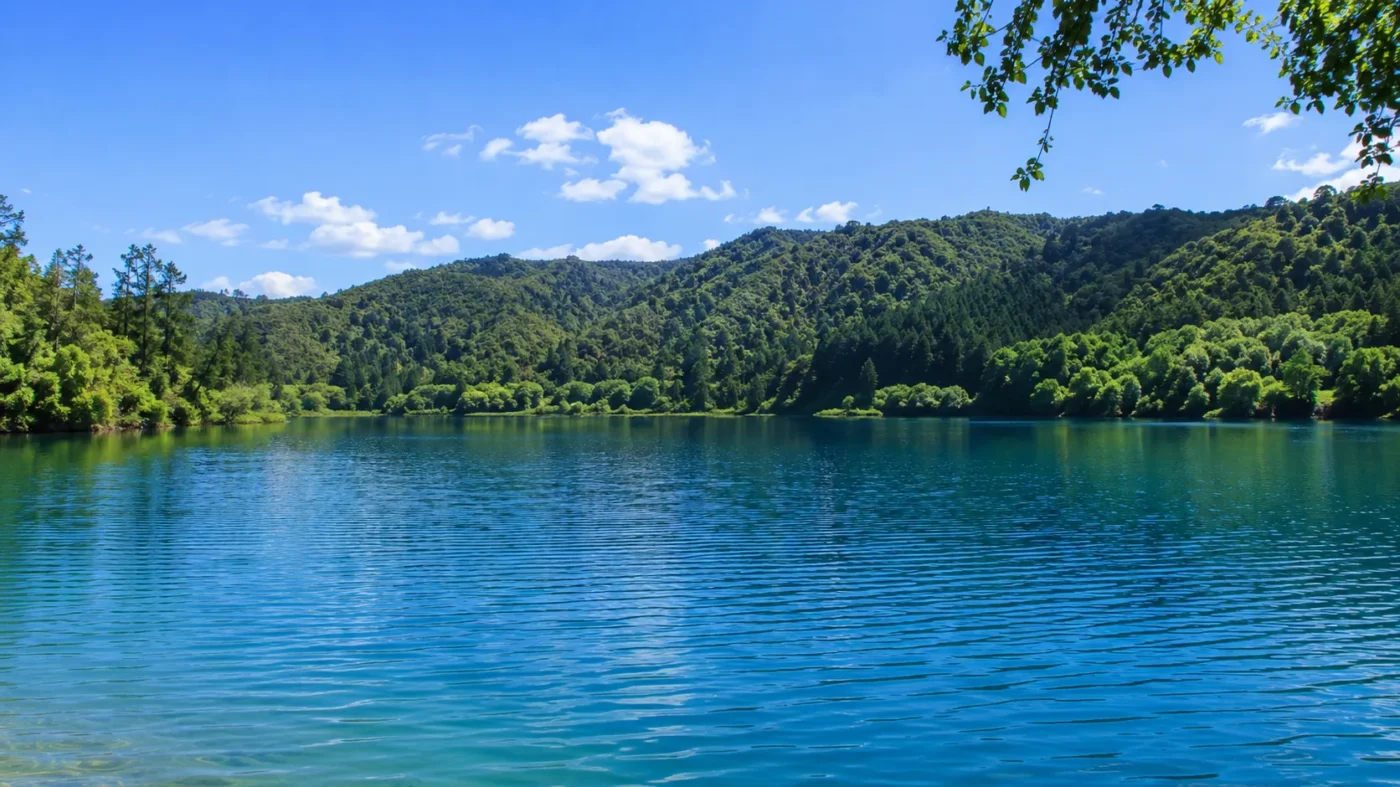
Documented measurement dataLake Tikitapu is visually blue, and its established colour explanation is optical rather than chemical: reflection from the white rhyolite and pumice lake bed gives the water its characteristic appearance. The lake is also relatively clear and low in phytoplankton biomass, conditions that allow the pale volcanic substrate to remain visually influential. Monitoring records biological seasonality, but not a recurring blue-to-green surface-colour cycle.
A pale lake bed helps create Tikitapu’s blue appearance
Te Ara attributes Tikitapu’s blue colour to reflection from its white rhyolite and pumice lake bed. That distinction matters because the explanation is about the path of light through the water and its interaction with a bright volcanic substrate, rather than the water being dyed blue by a dissolved pigment.
The regional action plan also records the lake’s characteristic deep-blue appearance. Tikitapu formed in a volcanic landscape, and pumice and rhyolitic material are part of the physical setting beneath the water. When light penetrates the lake and is reflected from that pale bed, the returned light contributes to the blue visual signal seen from above and around the shore.
Rhyolite and pumice function here as a light-coloured substrate. That is different from claiming that a blue mineral or chemical concentration directly colours the water.
Low algal biomass leaves more room for the lake bed to influence colour
Regional monitoring has long described Tikitapu as a low-productivity lake. The 2014/15 water-quality report states that low dissolved nitrogen and phosphorus concentrations limit phytoplankton growth. Its three-year averages for July 2011 to June 2014 included a Secchi depth of 7.5 metres and chlorophyll-a of 2.0 mg m−3, measurements consistent with relatively clear water and low algal biomass.
More recent reporting still places the lake near the low end of the trophic scale. The Rotorua Te Arawa Lakes Health Summary gives Tikitapu a Trophic Level Index of 2.8 for 2025/26, with a three-year average of 2.8. TLI combines water clarity, chlorophyll-a, total nitrogen and total phosphorus, so it provides useful context for the water column through which the lake-bed reflection is seen.
A TLI value describes trophic condition rather than a precise visual hue. It helps explain the clarity and algal environment associated with Tikitapu’s appearance, but it does not measure how blue the lake looks.
Winter chlorophyll changes do not establish a different winter colour
Tikitapu does have a documented annual biological cycle. Bay of Plenty Regional Council reporting notes that chlorophyll-a tends to be highest from June through August, probably because nutrients from deeper water become available as thermal stratification breaks down in early winter. During summer, fluorescence profiles show a deep chlorophyll maximum near the thermocline rather than a simple concentration of algae at the surface.
Those changes matter to lake optics because phytoplankton can alter clarity and the balance of light in the water column. They should not, however, be converted into an unsupported month-by-month colour sequence. The monitoring evidence describes seasonal chlorophyll and mixing behaviour without establishing that Tikitapu routinely changes from blue to another named surface colour in winter or summer.
The same monitoring report notes that chlorophytes dominate much of the lake’s primary production because low silica concentrations restrict diatom growth. This explains part of the biological composition of the water, but it is separate from the bed-reflection mechanism used to explain Tikitapu’s blue identity.
The contrast with Rotokākahi reveals how much the lake bed matters
Lake Tikitapu sits beside Rotokākahi, widely known as Green Lake, creating an unusually direct natural comparison. Te Ara describes Tikitapu’s blue colour as reflection from white rhyolite and pumice, while Rotokākahi’s green appearance is associated with its shallower water and sandy bottom.
The colour difference is reported as most apparent on a fine day. That is an important visual clue: illumination and viewing conditions can strengthen or weaken the contrast without requiring a change in the underlying chemistry of either lake. A photograph made under bright sun may therefore show Tikitapu as a more intense blue than the same water under cloud, even when its trophic condition and water chemistry have not materially changed.
Sources