Blue
Primary visual colorWhere Is Lake Geneva (Lac Léman)?
Vaud, Geneva, Valais / Haute-Savoie · Switzerland / France
Drag or zoom the real map. Verified shoreline geometry is highlighted with the lake’s LakeColors palette color when available.
Lake Geneva (Lac Léman) on the Globe
Rotate the world or focus directly on the lake.
The Lake Behind the Forel-Ule Color Scale
François-Alphonse Forel developed an eleven-tone blue-to-green color scale while studying Lake Geneva in 1890. Wilhelm Ule later added ten greener, yellow and brown tones, producing the twenty-one-class Forel-Ule scale used today.
Value: 11 tones
Evidence: High
Value: 21 tones
Evidence: High
Value: In-situ observations paired with Secchi measurements and satellite validation
Evidence: High
Lake Geneva's Optical Year
What Moves the Water Between Blue and Blue-Green
Modern Color and Clarity Measurements
Documented measurement dataRange reported by the Lémanscope monitoring project.
Quality-controlled midi-Secchi observations used in the published participatory-science study.
How to Read the Color Evidence
Lake Geneva, or Lac Léman, is best described as a blue to blue-green lake, but that description is not a permanent color code. Its apparent color changes with optical conditions in the water, including phytoplankton, suspended material and water clarity, while illumination and viewing geometry also affect what the eye sees. The lake has an unusual place in water-color science: François-Alphonse Forel created his first blue-to-green color scale while studying these waters, and Lake Geneva is still being measured with the later 21-step Forel-Ule system.
Lake Geneva Helped Give Water Color a Number
Long before satellite instruments could map water reflectance, limnologists needed a repeatable way to describe what they saw. In 1890, Swiss scientist François-Alphonse Forel used eleven color tones spanning blue toward green for observations of Lake Geneva. Wilhelm Ule expanded the method two years later with ten additional tones extending through greener, yellow and brown water. The combined Forel-Ule scale therefore contains 21 classes.
That history matters here because Lake Geneva is not merely a lake to which the Forel-Ule scale can be applied. It is part of the scale’s origin. Modern research continues the same basic idea with better controls: observers compare the apparent water color with standardized Forel-Ule classes, while Secchi disks provide a separate measure of visibility through the water.
Why Blue Can Shift Toward Blue-Green
Natural water color comes from the wavelengths of visible light that survive absorption and scattering within the water column and return toward an observer. In a relatively clear lake, this optical balance can favor blue wavelengths. Add or redistribute optically active material and the balance changes.
For Lake Geneva, phytoplankton is particularly relevant because it changes through the year and is measured routinely by CIPEL alongside transparency. Chlorophyll-bearing organisms alter absorption and scattering in the surface layer. Suspended particles and colored dissolved material can alter the optical signal as well. The result is better thought of as a moving blue-to-blue-green range than as one permanent shade.
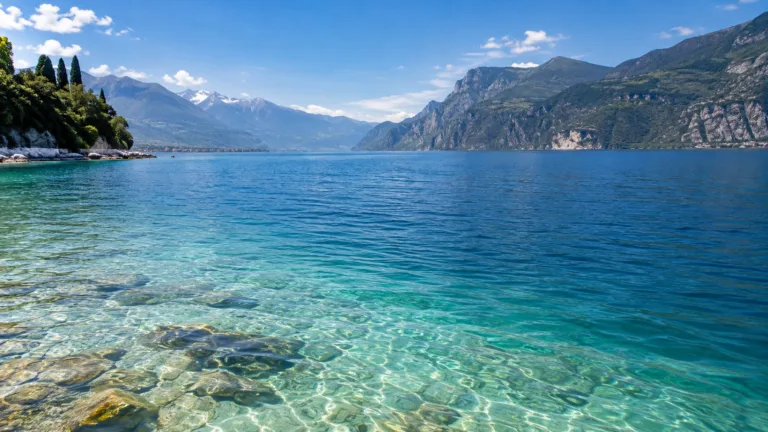
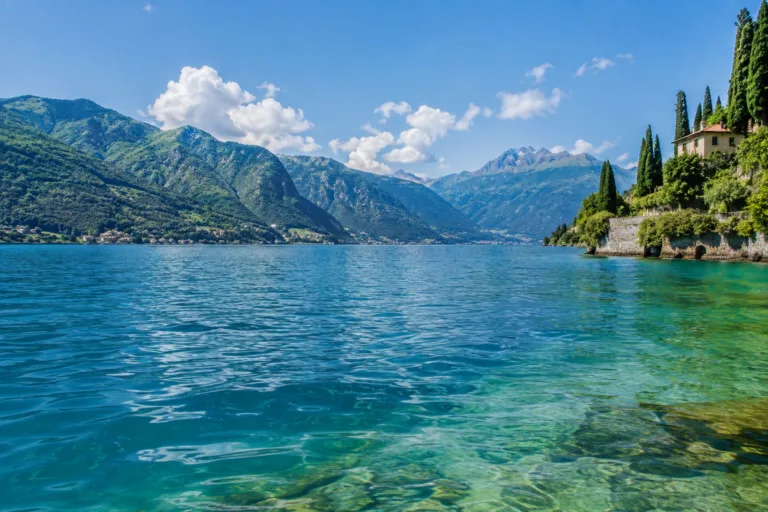
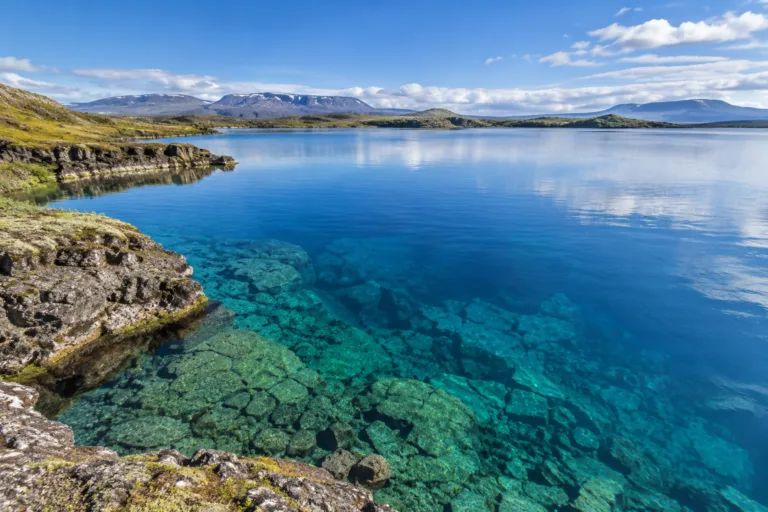
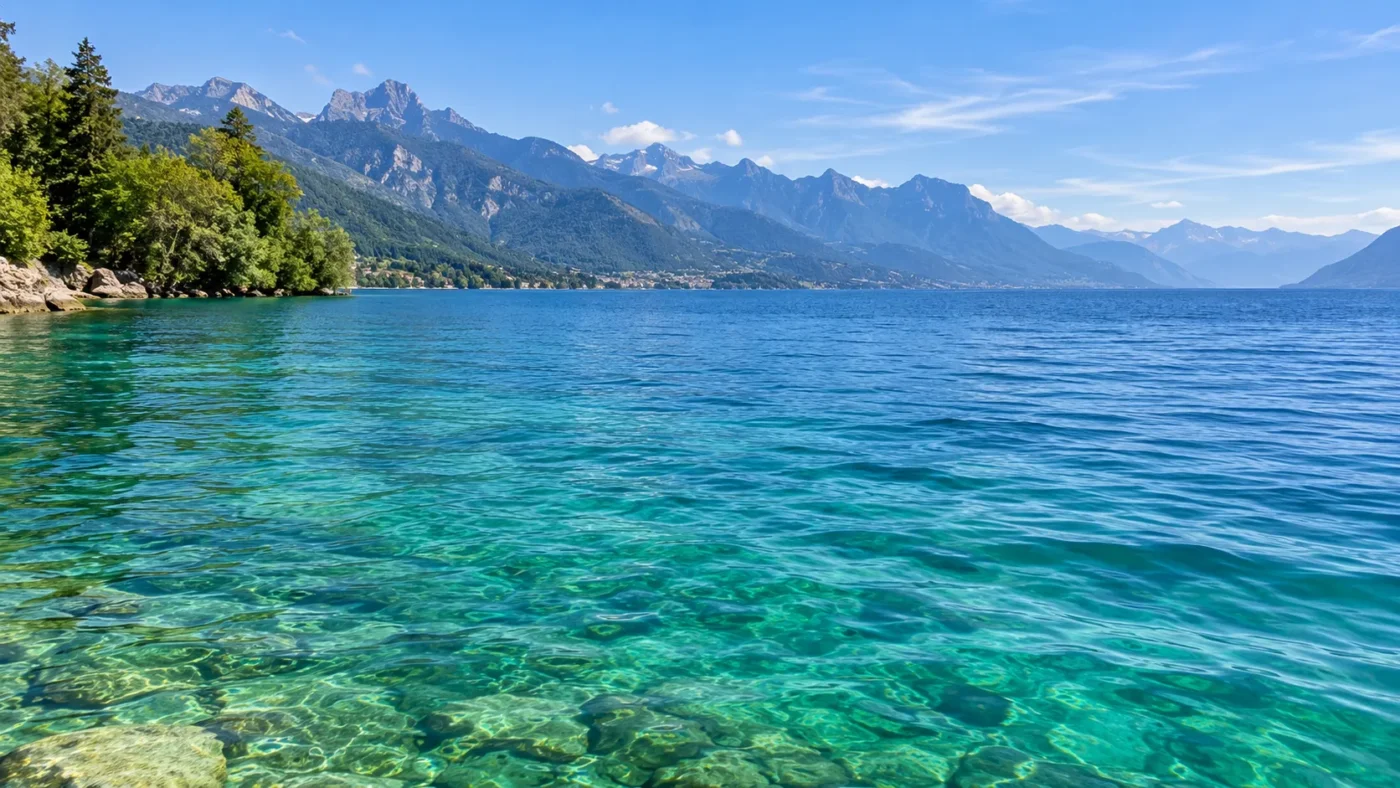
This also explains why a bright turquoise-looking shoreline photograph should not automatically be interpreted as a lake-wide scientific color measurement. Shallow water can expose bottom influence, while surface reflections, sun angle and camera processing can make a photograph look different from a standardized color observation taken over deeper water.
The Forel-Ule Scale Does Not Give Lake Geneva One Permanent Number
The 21 Forel-Ule classes run from the blue end of natural waters through blue-green and green toward yellow-brown. A measurement belongs to a particular place and time. Assigning one Forel-Ule number to the whole of Lake Geneva would erase the variation that the measurement system is intended to record.
That distinction is visible in modern monitoring. LÉMANSCOPE uses citizen scientists around Lake Geneva to collect Secchi-depth and Forel-Ule observations. A peer-reviewed analysis used 1,156 Lake Geneva measurements collected between May 2024 and February 2025. The same study compared the observations with high-resolution true-color imagery and reported Lake Geneva as appearing bluer than the more inshore waters examined at Wilmington in the United States and Lake Vembanad in India.
Current field work also shows why color and clarity belong together without being treated as identical measurements. Eawag reports Lake Geneva visibility depths of roughly 2 to 12 metres. For the color observation, the Forel-Ule color is assessed in connection with the Secchi method, giving researchers a standardized optical reference rather than an informal description such as “very blue today.”
Spring Blooms and the June Clear-Water Phase Change the Optical Setting
Lake Geneva has a recurring phytoplankton succession rather than a simple month-by-month color cycle. Long-running research describes spring phytoplankton development from roughly March into June. As phytoplankton biomass rises, water transparency can decrease. This is an ecological change with direct optical relevance, even when no source provides an exact Forel-Ule value for every month.
A particularly useful marker is the lake’s clear-water phase around June. Research links this phase partly to zooplankton grazing on phytoplankton, while changes in nutrients also affect the developing community. Lower phytoplankton abundance can temporarily increase transparency. Later, summer phytoplankton communities develop again as the upper water column warms and stratifies.
Color and Clarity Measure Different Parts of the Same Water
| Measurement | What It Records | What It Does Not Mean |
|---|---|---|
| Forel-Ule Color | The apparent color of the water expressed on a standardized 21-class scale. | It is not a direct concentration measurement for one chemical or organism. |
| Secchi Depth | The depth at which a standardized disk disappears from view, used as a measure of water transparency. | It is not itself a water-color value. |
| Chlorophyll a | A measured indicator related to phytoplankton biomass. | It does not alone determine the exact visible color because other optical components also contribute. |
CIPEL monitors transparency and chlorophyll alongside temperature, oxygen and other lake properties. This makes the visual appearance more useful scientifically: a change in color can be examined together with measurements that help explain what was happening in the water rather than being interpreted from color alone.
Forel’s Nineteenth-Century Idea Is Now Paired With Satellites
The measurement method may be old, but its modern role is different. LÉMANSCOPE combines human observations around Lake Geneva with satellite work. Forel-Ule measurements and Secchi depths collected on the lake are used to evaluate visibility information derived from Earth-observation data, including Sentinel measurements.
This pairing is useful because each method sees the lake differently. A satellite can repeatedly observe broad areas when conditions permit. A person on the water can make an in-situ measurement at a known point and time. Matching the two helps researchers test remote observations against measurements made directly on the lake.
Lake Geneva therefore has two distinct places in water-color science. It was the lake where Forel developed the blue-to-green precursor of the Forel-Ule scale, and it is now a field site where the same color concept is being connected with large modern datasets and satellite observation.
Sources
- Eawag — Lémanscope: Citizen Science Sampling in Lake Geneva
- Frontiers in Environmental Science — Participatory Water Colour and Clarity Monitoring
- CIPEL — Lake Geneva Scientific Monitoring
- Limnology and Oceanography — Temporal Mapping of Phytoplankton Assemblages in Lake Geneva
- Permanent Committee on Geographical Names — Switzerland Toponymic Factfile
- Organic Geochemistry — Sources and Seasonality in Lake Geneva