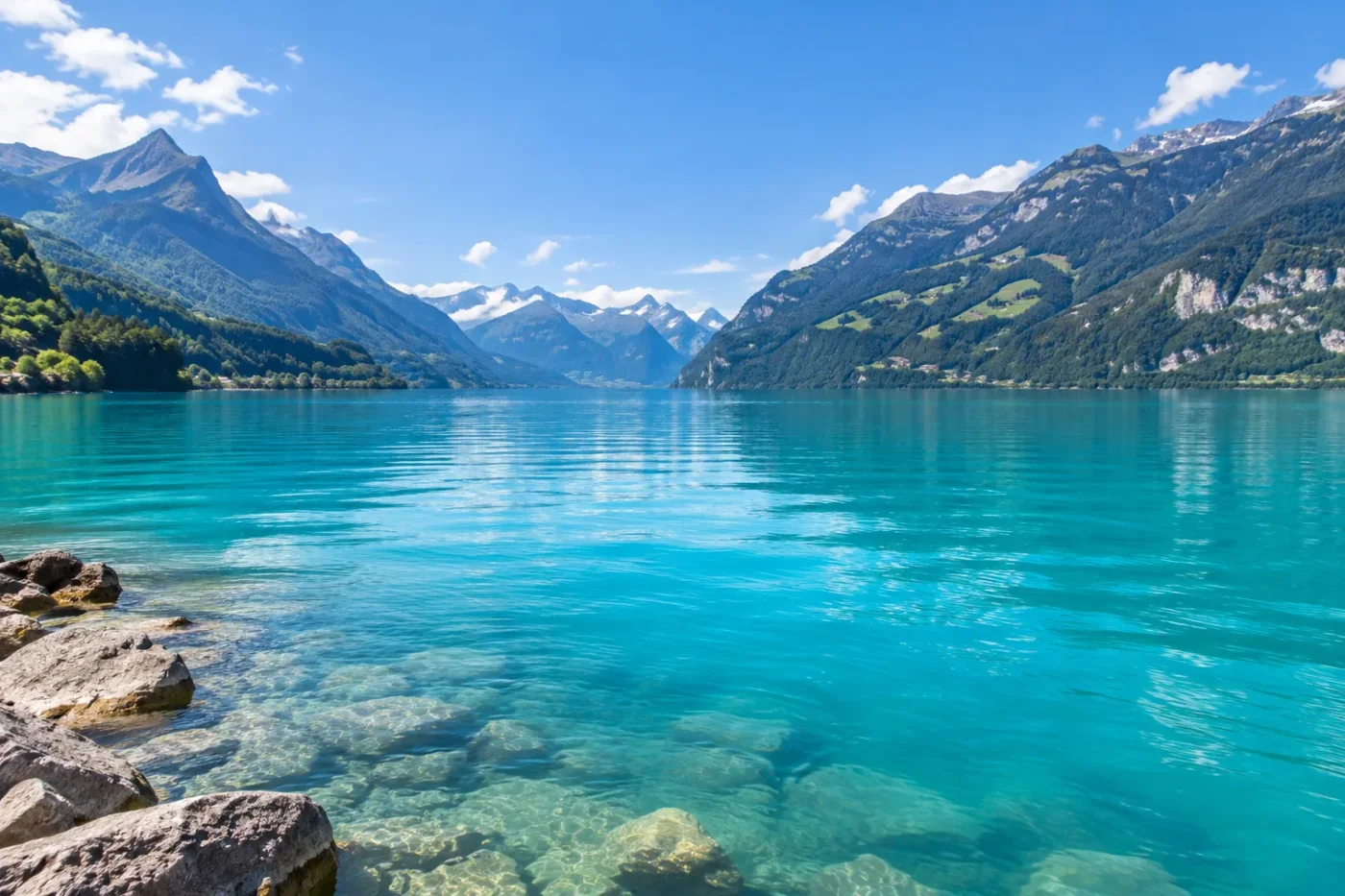
Turquoise Blue
Primary visual colorWhere Is Lake Brienz (Brienzersee)?
Canton of Bern · Switzerland
Drag or zoom the real map. Verified shoreline geometry is highlighted with the lake’s LakeColors palette color when available.
Lake Brienz (Brienzersee) on the Globe
Rotate the world or focus directly on the lake.
Reservoirs Shifted the Natural Turbidity Rhythm
Upstream reservoirs in the Aare catchment retain much of the coarse sediment and redistribute particle delivery through the year, reducing summer particle supply while maintaining more winter fine-particle input than reconstructed no-dam conditions.
Value: Lower particle supply than the reconstructed no-dam case
Value: Higher fine-particle delivery than the reconstructed no-dam case
From Glacial Erosion to Turquoise Water
Measurements Behind the Visible Color Story
Documented measurement dataReported during winter clear-up conditions.
Reported for the dam-influenced system examined in the study.
Particle-size distributions were quantified by single-particle counting.
How the Lake Brienz Color Profile Is Supported
Claim-level supportThe geoscience study directly connects fine-grained glacial-melt sediment with the lake's milky turquoise color.
Swiss Journal of Geosciences — Subaqueous geomorphology and delta dynamics of Lake BrienzEvidence: HighMulti-year particle, turbidity and Secchi observations document winter clear-up, spring onset, summer loading and autumn decline.
Water Resources Research — Effects of upstream hydropower operation on particle transport and turbidityEvidence: HighThe study measured particle-size distributions and mineral composition in the lake and its two main tributaries.
Geochimica et Cosmochimica Acta — Size and composition of inorganic colloids in Lake BrienzEvidence: HighLake Brienz is most often seen as turquoise blue, with a milkier turquoise appearance when fine glacial sediment is abundant in the water. Its color is closely tied to mineral particles delivered mainly by the Aare and Lütschine, while sediment concentration, sunlight and the changing light field of the lake affect how saturated or opaque that turquoise looks.
Glacial Flour Gives Lake Brienz Its Milky Turquoise Character
The color has a physical link to the Alpine catchment. Glaciers and glacially influenced rivers erode bedrock into extremely fine mineral material. Meltwater then transports part of that material downstream, eventually carrying suspended particles into Lake Brienz through the Aare and Lütschine.
A geoscience study of Lake Brienz describes fine-grained sediment from glacial meltwater in spring and summer as the material that turns the lake milky turquoise. That wording matters because the particles do more than tint the water like dissolved dye. They remain suspended, raise turbidity and alter how light moves through and returns from the water column.
The material is genuinely fine. Research that sampled Lake Brienz and its tributaries from June 2004 to October 2005 measured inorganic colloids across a particle-size range of 0.1 to 2 micrometres. The study also examined their mineral composition, showing that the suspended material is a mixture linked to the geology of the two river catchments rather than one single turquoise-producing mineral.
Winter Clears the Water; Meltwater Builds the Turbidity Again
The particle cycle gives Lake Brienz a real seasonal rhythm. Measurements from the late 1990s and early 2000s found that the water column generally clears during winter as particle concentrations fall. Secchi depth, a standard measure of water transparency, reached as much as about 10 metres under winter clear-up conditions in the study period.
Spring changes the system. Snowmelt commonly begins to influence turbidity around April, although the timing and strength vary with weather. By summer, the two main tributaries transport much larger particle loads than during winter. The suspended material entering the upper part of the lake reduces light penetration and helps create the more opaque, milky side of the turquoise appearance.
Autumn moves in the opposite direction. As river-borne particle input declines, the lake gradually clears again. This change does not mean that the turquoise simply disappears. The official Lake Brienz destination description notes especially strong turquoise impressions in spring and autumn and also points to sunlight as an important influence on the visible intensity of the color.
A period with more suspended sediment may produce a milkier appearance, while strong sunlight can make turquoise look more saturated. Scientific turbidity and Secchi measurements therefore cannot be translated directly into a single visual color ranking for each month.
Hydropower Reservoirs Changed When Particles Reach Lake Brienz
The lake’s present particle cycle is not identical to the cycle that would occur without the upstream reservoir system. Research on the Aare catchment found that hydropower reservoirs trap large amounts of sediment before the water reaches Lake Brienz. They also alter when water and fine particles are released downstream.
The resulting pattern is unusual for a glacier-influenced Alpine lake. Compared with reconstructed conditions without the dams, the studied system receives less particle supply during summer but more fine-particle input during winter. The undammed Lütschine retains a more natural seasonal regime, with very low winter particle transport and much higher loads during the melt season.
This does not establish a different named color for every reservoir-related change. The study measured suspended particles, turbidity, river intrusion and water transparency rather than assigning standardized color values. What it does establish is that human control of upstream water storage has altered one of the physical processes behind the lake’s visible appearance.
The Aare and Lütschine Do Not Deliver Sediment in the Same Way
The two major tributaries approach Lake Brienz from different catchments and behave differently. The Lütschine follows a comparatively natural glacial flow regime. Its particle transport rises strongly during the warmer melt season. The Aare, by contrast, is affected by major hydropower installations farther upstream.
Those differences affect where suspended sediment enters the lake and how long it remains in the upper water column. River water can flow across, into or beneath lake water depending on temperature, density and particle concentration. This means the visible surface does not respond only to the total amount of sediment entering the lake; the depth at which that sediment travels also matters.
The lake’s steep underwater form adds another layer. Lake Brienz is about 261 metres deep, and sediment delivered by its tributaries can be transported through the basin by several kinds of density-driven flows. Some material remains relevant to surface turbidity, while other sediment is carried into deeper water and contributes less directly to the color seen from above.
Turquoise, Emerald and Milky Are Descriptions, Not Spectral Readings
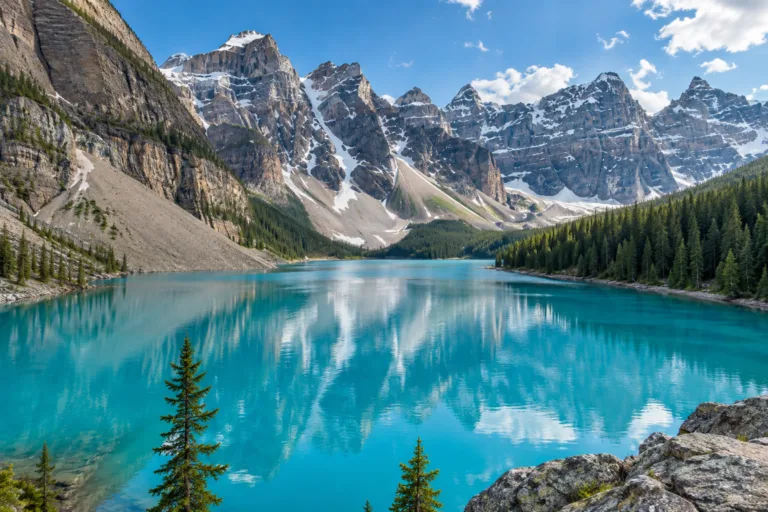
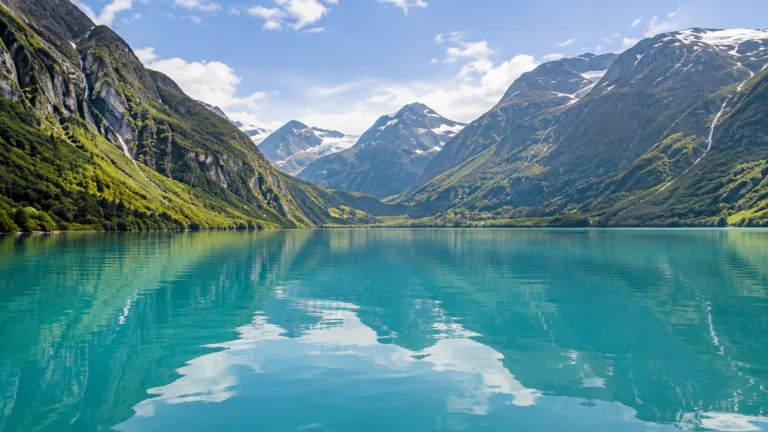
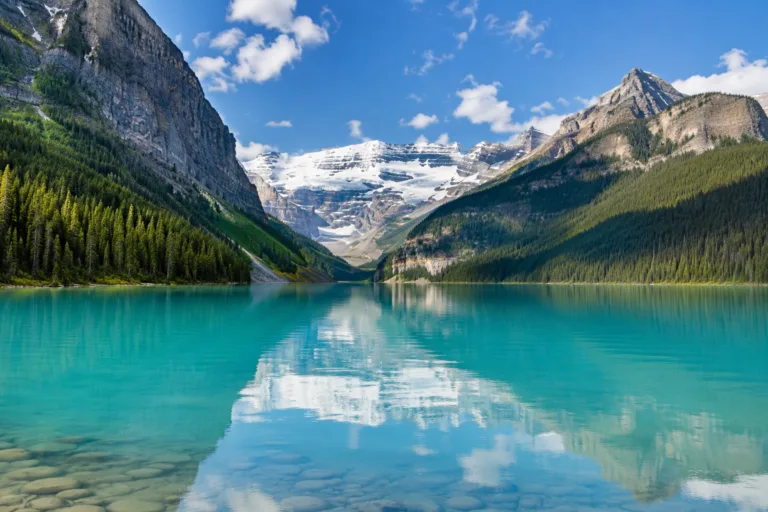
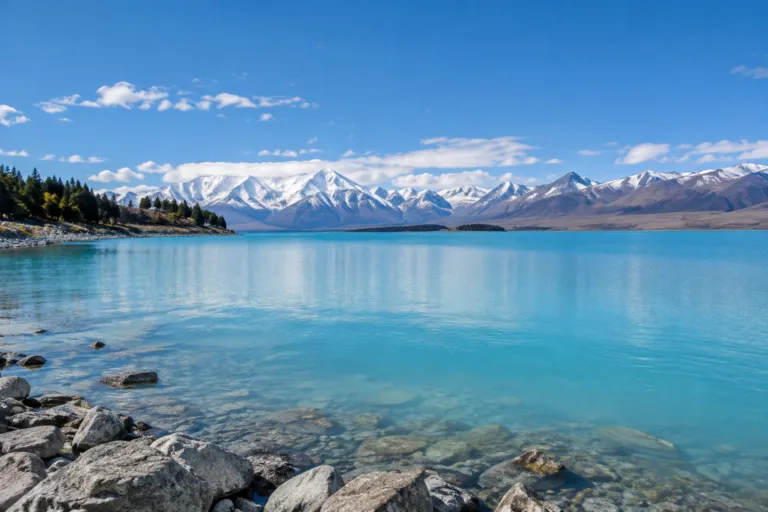
Different authoritative descriptions do not always use exactly the same color word for Lake Brienz. Turquoise blue is the dominant description, while emerald green also appears in official tourism material. Scientific literature adds the more specific phrase milky turquoise when discussing the effect of glacial sediment.
These labels describe visible appearance. They should not be treated as laboratory color coordinates. The Lake Brienz studies examined particle concentration, particle size, mineral composition, turbidity, light penetration and Secchi depth; they did not establish one fixed RGB, HEX or dominant-wavelength value for the entire lake.
That distinction helps explain why photographs and direct observations can vary without contradicting the sediment mechanism. Illumination changes through the day, reflections alter the surface view, and the concentration and vertical distribution of suspended particles change through the year. A greener-looking view is therefore not evidence by itself that the lake has entered a separate chemical state.
Historical scientific work provides quantitative records for transparency and suspended particles. Terms such as turquoise blue, emerald green and milky turquoise remain visual descriptions unless a study explicitly pairs them with spectral color measurements.
Weather Can Push the Particle Cycle Away From a Typical Year
The annual pattern is useful, but it is not a fixed calendar. In 1999, heavy winter snowfall followed by intense snowmelt and high spring discharge caused unusually large particle inputs. Elevated particle content appeared earlier and remained elevated longer than in the more typical years examined by the same research team.
Summer 2003 produced a different disturbance. Exceptional heat increased glacier melting in the catchment, and the undammed Lütschine delivered an unusually high suspended load to the lake. Events like these show why a month should not be assigned one permanent shade of turquoise: weather can change sediment supply and the vertical distribution of particles from one year to the next.
The most defensible annual picture is therefore a sequence of clearer winter conditions, a variable spring transition, sediment-rich summer water and autumn clear-up. The exact visual shade within those phases remains sensitive to both the particle regime and the optical conditions at the time of observation.
Sources
- Swiss Journal of Geosciences — Subaqueous geomorphology and delta dynamics of Lake Brienz
- Water Resources Research — Effects of upstream hydropower operation on particle transport and turbidity
- Geochimica et Cosmochimica Acta — Size and composition of inorganic colloids in Lake Brienz
- Interlaken Tourism — Lake Brienz
- OpenStreetMap Wiki — Canton Bern lake relations