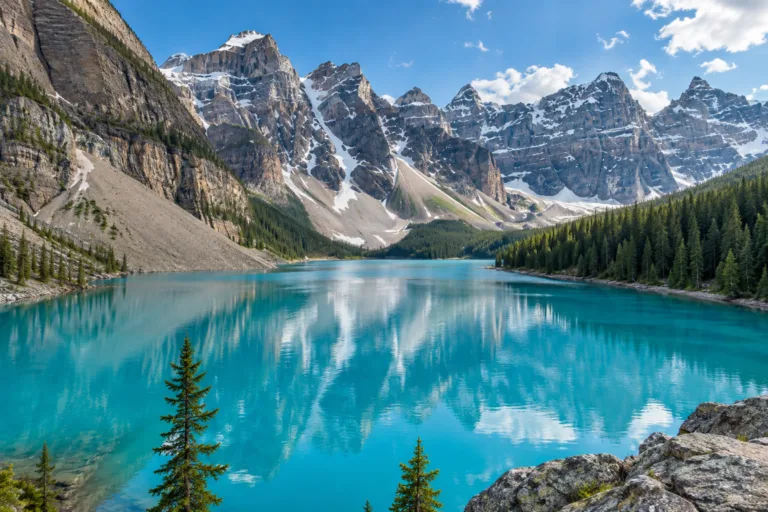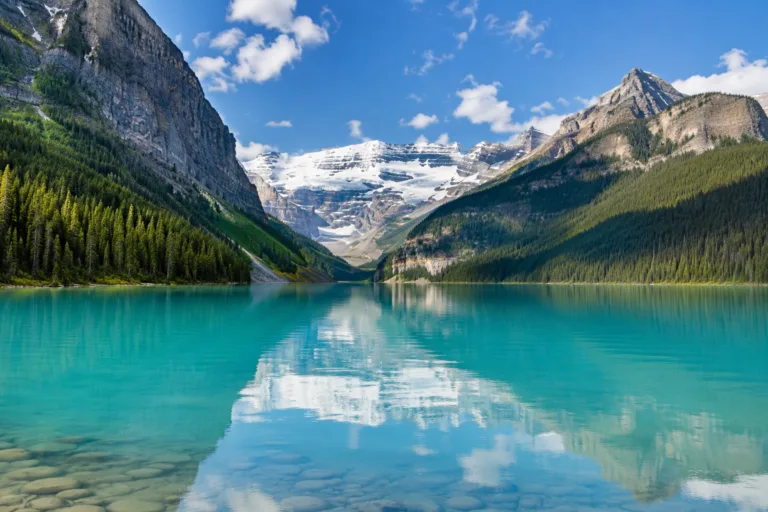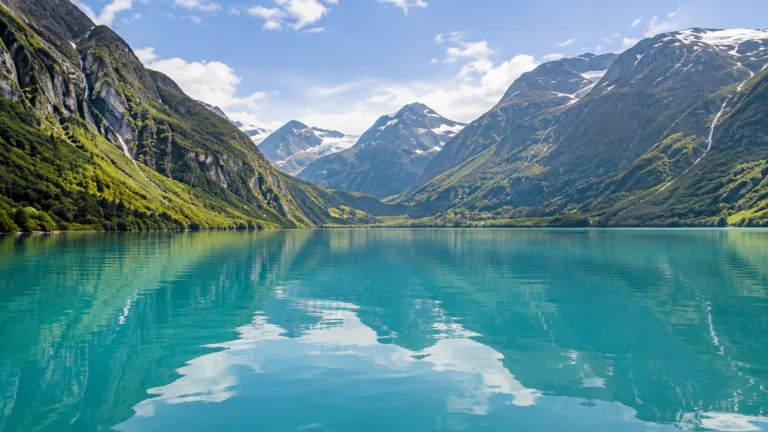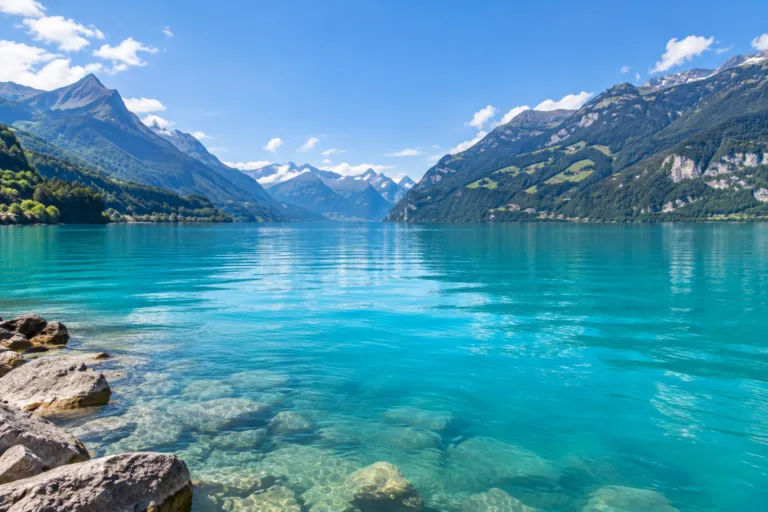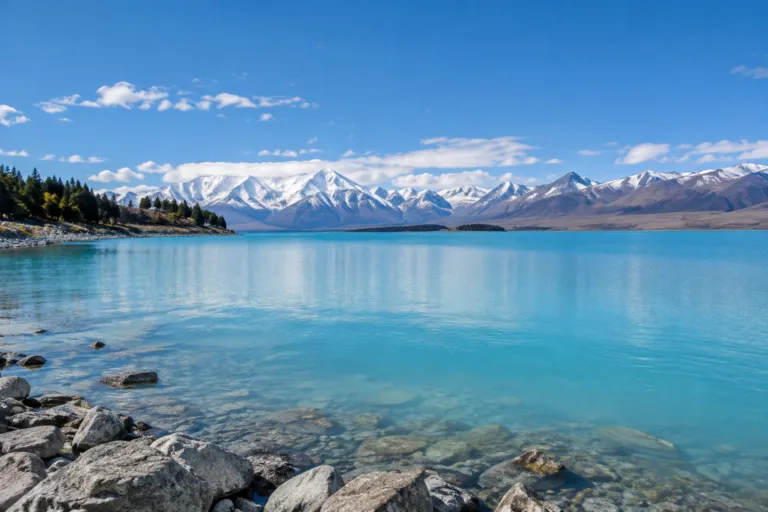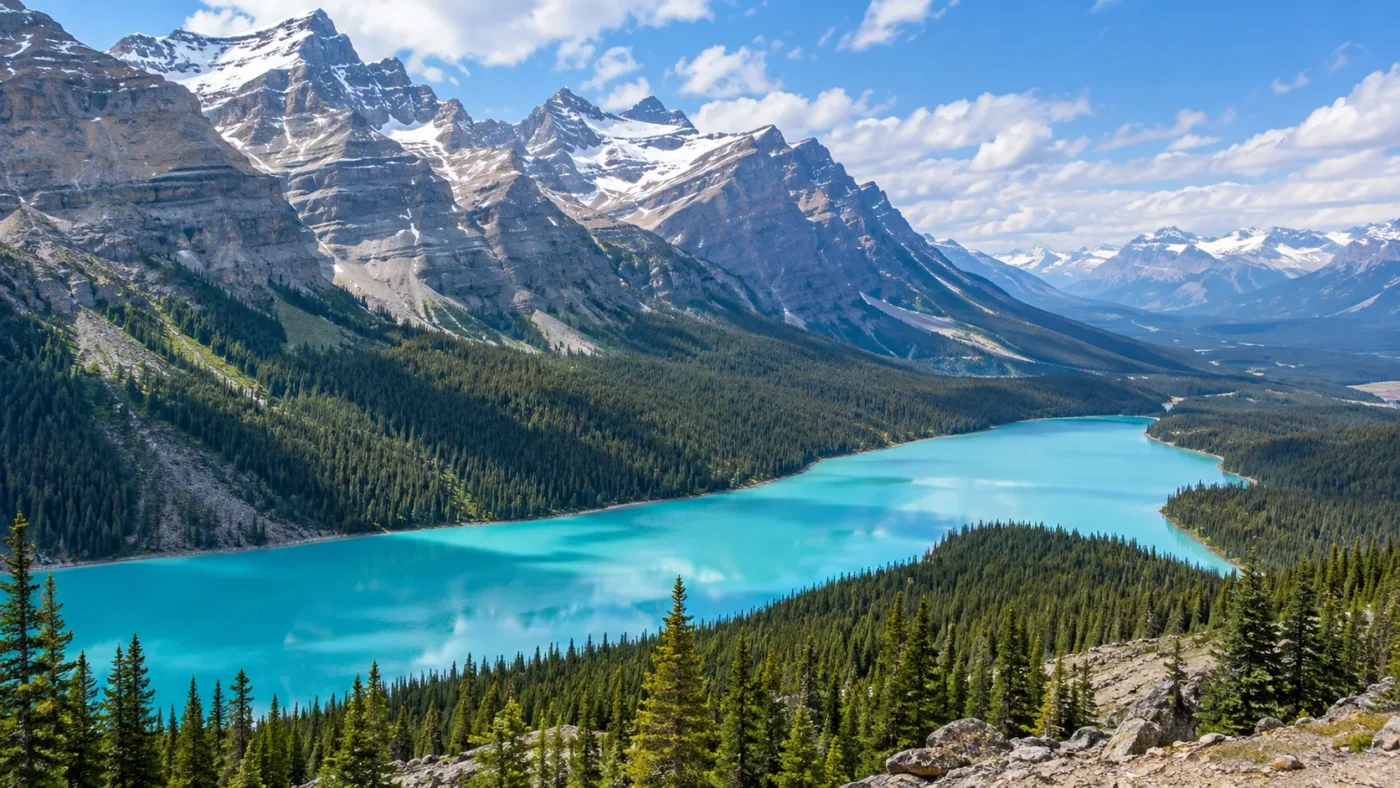
Turquoise
Primary visual colorWhere Is Peyto Lake?
Alberta · Canada
Drag or zoom the real map. Verified shoreline geometry is highlighted with the lake’s LakeColors palette color when available.
Peyto Lake on the Globe
Rotate the world or focus directly on the lake.
What the 1987 Melt-Season Study Measured
June–August 1987Field measurements showed that heavy sediment discharge from Peyto Creek continuously produced surface sediment plumes while sediment-rich currents moved through deeper parts of the lake.
Value: Continuous sediment plumes from Peyto Creek
Value: Turbidity currents and bottom suspension flows
Value: Silt and clay exceeded 70 wt%
From Glacier-Ground Rock to Turquoise Water
How the Peyto Lake Color Profile Is Supported
Claim-level supportParks Canada directly describes Peyto Lake as turquoise.
Parks Canada — Banff National Park HikingEvidence: HighLake currents, suspended-sediment concentration and water temperature were measured during the 1987 ice-melting period.
Chikita et al. (1991) — Dynamic Sedimentation Processes in Peyto LakeEvidence: HighNASA explains how fine glacial flour remains suspended and alters visible-light absorption and scattering.
NASA Earth Observatory — How Glaciers Turn Lakes TurquoiseEvidence: HighThe listed Peyto sources do not provide a lake-specific dominant wavelength, reflectance spectrum or CIE/Lab color value.
Parks Canada — Banff National Park HikingChikita et al. (1991) — Dynamic Sedimentation Processes in Peyto LakeNASA Earth Observatory — How Glaciers Turn Lakes TurquoiseEvidence: LimitedPeyto Lake is best described as turquoise, but its color is not a pigment dissolved in the water. Fine mineral sediment carried through its glacier-fed system remains suspended long enough to alter how sunlight moves through and back out of the water, producing the blue-green appearance associated with the lake.
Peyto’s Turquoise Comes from Suspended Rock Flour
The most useful correction to the usual one-line explanation is that rock flour is particulate matter. Glacial erosion produces extremely fine mineral grains. Meltwater can carry those grains downstream, and particles that settle slowly remain in the water column instead of dropping out immediately.
NASA’s explanation of turquoise glacier-fed lakes describes the optical sequence: fine silt and clay remain suspended; the particles and water absorb different parts of the visible spectrum; and more blue and green light is scattered back toward an observer. Peyto Lake has the local sediment supply needed for that process. A field study of the lake during the 1987 ice-melting period recorded heavy sediment discharge from Peyto Creek and persistent sediment plumes in the surface layer.
Calling the color “mineral blue” can be misleading if it sounds like dissolved minerals are acting as a dye. The measured Peyto process involves fine suspended sediment, while the turquoise appearance comes from the way that particle-rich water interacts with light.
Peyto Creek Sends Fine Sediment Through More Than the Surface
The 1991 limnology study gives Peyto Lake a much more detailed color story than a generic glacier-lake description. During June through August 1987, sediment entering from Peyto Creek formed surface plumes, but part of the load also moved as denser currents near the lake bottom. The researchers reported that silt and clay made up more than 70 percent by weight of the input fine sediment.
Those fine particles settle slowly, which helps explain why a glacier-fed lake can keep a visibly mineral-rich water column during active melt. The same study also showed that the lake contains a mid-lake sill and that sediment transport continues through deeper circulation rather than behaving as a simple layer that enters, spreads evenly and immediately settles.
Deep turbidity currents are not the same thing as a documented surface-color boundary between two parts of Peyto Lake. The sediment study supports a complex internal transport system, but it should not be turned into an invented “north basin versus south basin” color map.
The Best-Measured Seasonal Window Is the Glacier-Melt Period
Peyto Lake does have a seasonal color system, yet the evidence is uneven across the calendar. The strongest lake-specific measurements in the sources above come from June through August, when the 1987 study tracked glacier-melt sediment entering through Peyto Creek. That is direct evidence for an active suspended-sediment period, not a month-by-month set of measured color coordinates.
At the other end of the annual cycle, Parks Canada describes Peyto Lake in winter as frozen and snow covered. That surface state hides the open-water turquoise appearance. The calendar therefore separates documented physical states from months where a precise lake-color claim is not supported, rather than assigning a decorative shade to every month.
A brighter or duller photograph does not by itself prove that the lake’s water chemistry changed. Open water, suspended-sediment load, solar angle, cloud cover and the observer’s viewing geometry can all alter the visible shade while the same broad glacial-sediment mechanism remains in place.
Turquoise Is Well Supported; an Exact Peyto Color Number Is Not
Parks Canada directly identifies Peyto Lake as turquoise, while the sediment study supplies lake-specific physical evidence for fine material moving through the water during glacier melt. NASA provides the broader optical explanation for why suspended glacial flour can return blue-green light to an observer.
That evidence does not amount to a Peyto-specific laboratory color standard. The sources used here do not report a dominant wavelength for the lake, a calibrated reflectance spectrum, or a CIE/Lab value that could be treated as Peyto Lake’s exact color. Assigning a precise HEX, RGB or wavelength from photographs would create a level of precision the measurements do not support.
Sources
- Parks Canada — Banff National Park Hiking
- Natural Resources Canada — Peyto Lake Official Place Record
- Chikita et al. (1991) — Dynamic Sedimentation Processes in Peyto Lake
- NASA Earth Observatory — How Glaciers Turn Lakes Turquoise
- Parks Canada — Jasper Winter Adventure Guide
- OpenStreetMap — Peyto Lake Relation 18099392