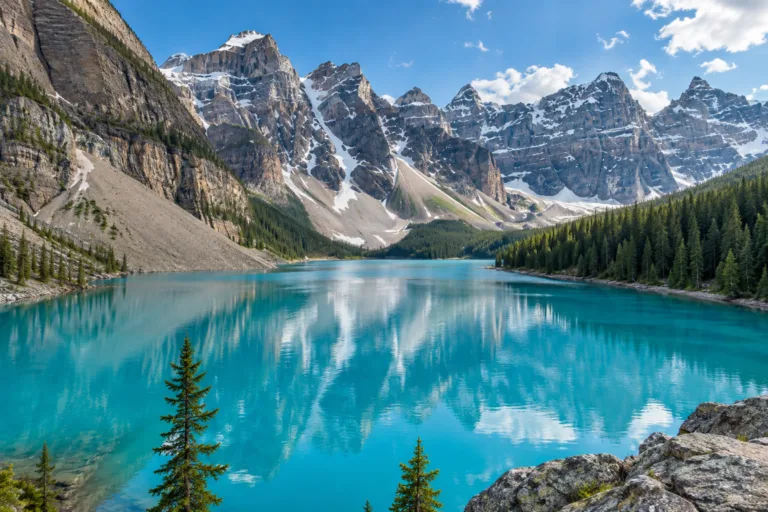
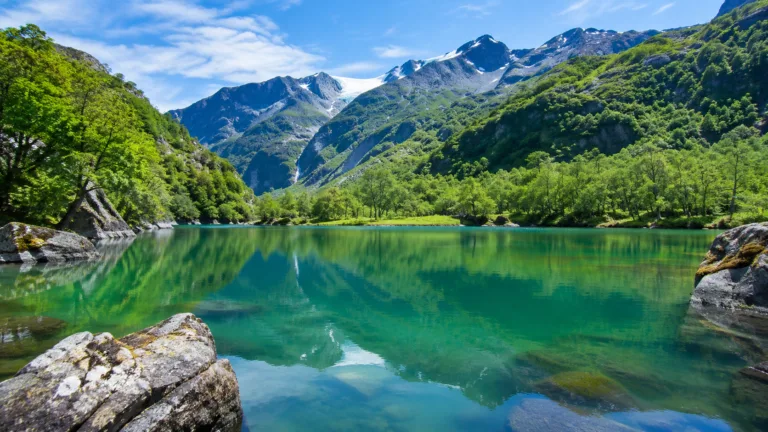
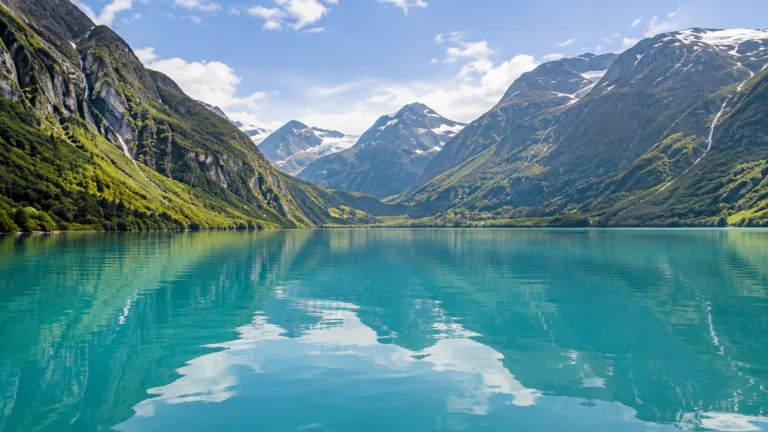
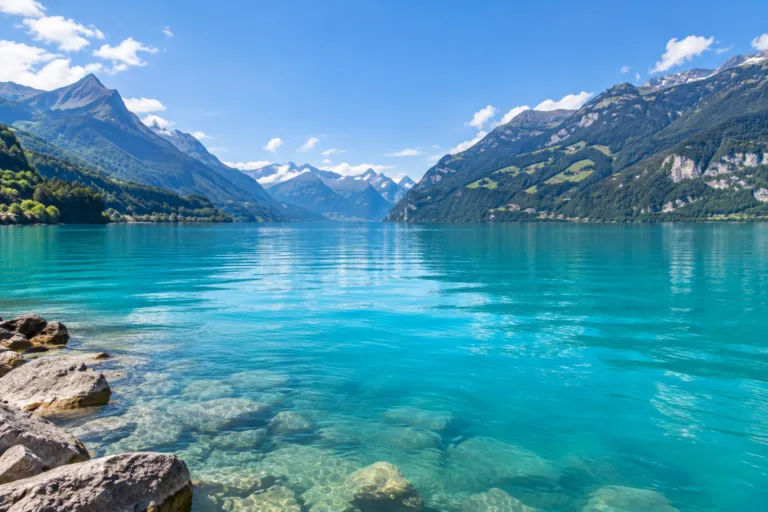
Lake Louise is best known for turquoise open water, with paler turquoise appearances when fine glacial sediment is strongly suspended. Its colour is closely tied to rock flour carried into the lake by glacier meltwater and to the way light interacts with those suspended particles. The visible open-water colour cycle is interrupted by winter ice, while melt-season sediment supply can change the intensity and milkiness of the turquoise appearance.
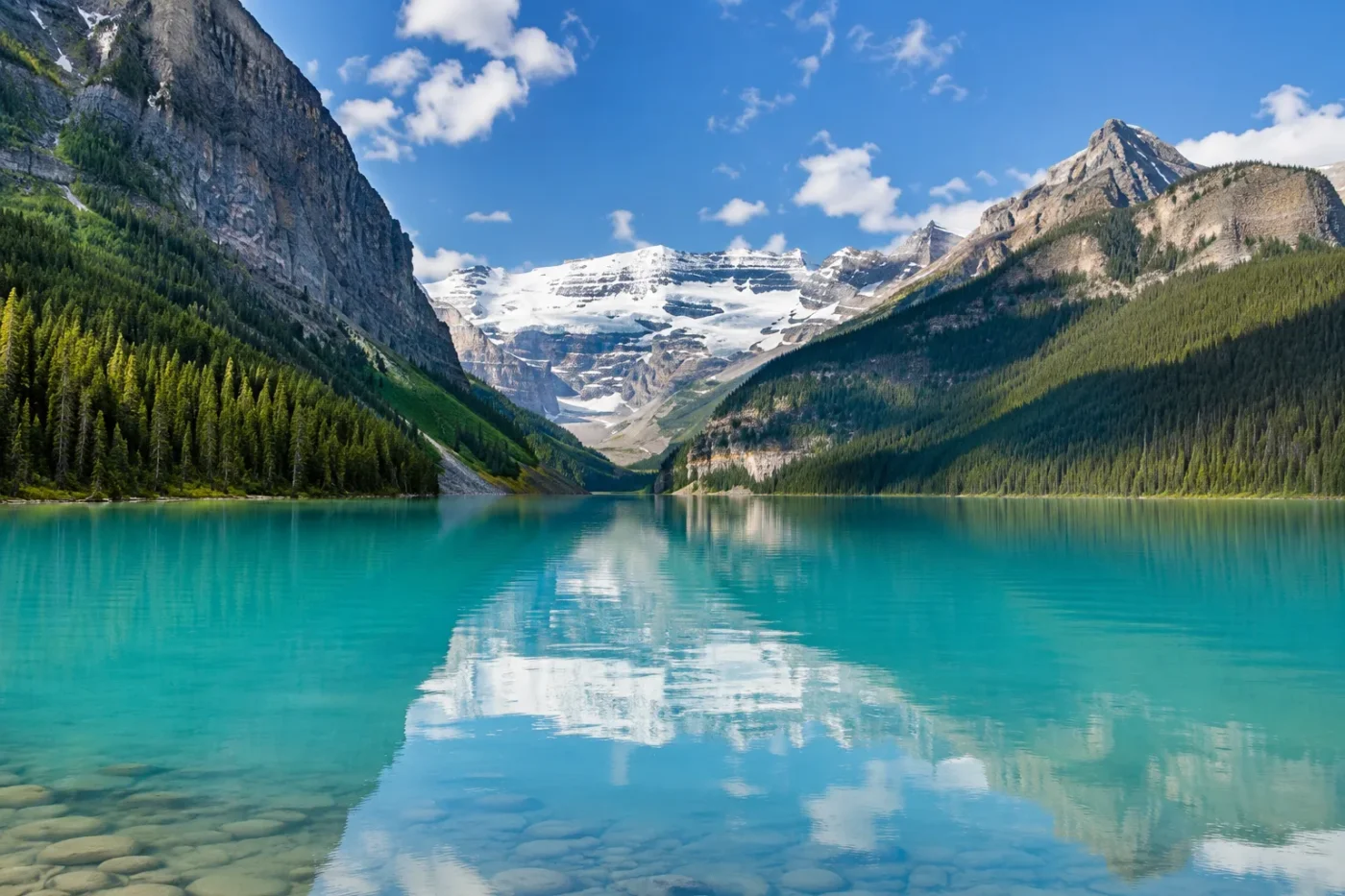
Turquoise
Primary visual colorWhere Is Lake Louise?
Alberta · Canada
Drag or zoom the real map. Verified shoreline geometry is highlighted with the lake’s LakeColors palette color when available.
Lake Louise on the Globe
Rotate the world or focus directly on the lake.
What Supports the Lake Louise Color Profile
Claim-level supportThe Turquoise Color Comes from Fine Glacial Sediment
Lake Louise is not turquoise because the water contains a permanent blue-green pigment. The important material is extremely fine mineral sediment produced as moving glacier ice grinds against bedrock. Meltwater carries this material, commonly called rock flour or glacial flour, toward the lake.
The finest particles can remain suspended rather than settling immediately. Their presence changes how light travels through and leaves the water. The interaction between daylight, water and suspended mineral particles strengthens the blue-to-turquoise visual signal associated with glacier-fed lakes. The European Geosciences Union specifically describes suspended rock flour in Lake Louise as producing its pale turquoise appearance.
A change in apparent turquoise intensity does not require the lake to acquire a new dissolved colorant. Changes in suspended glacial material can alter how pale, milky or strongly turquoise the open water appears.
Sediment Supply Changes Through the Melt Season
One of the most useful historical records of Lake Louise comes from sediment research published in the American Journal of Science in 1922. Field observations documented silt-laden glacial inflow to the lake and found that suspended-sediment transport was greatest around spring rainfall and rapid lower-elevation snowmelt, remained substantial during summer, and became very small during winter.
That seasonal sediment cycle matters because the same fine material participates in the lake’s visual color mechanism. A modern European Geosciences Union account notes that late summer can be an especially favorable period for seeing the characteristic colors as glacier melting becomes strong. This supports a melt-season relationship between sediment delivery and visible turquoise, but it does not establish a fixed shade for every summer month.
The sources used here document Lake Louise’s turquoise appearance, glacial sediment mechanism, seasonal sediment transport and ice-off timing. They do not provide a modern month-by-month optical color measurement series for the lake. Months without specific color evidence are therefore left neutral in the Color Year instead of being assigned an unsupported shade.
Winter Ice Creates the Clearest Break in the Color Cycle
The most clearly documented annual change is not a switch from turquoise to another open-water color. It is the transition between visible water and an ice-covered surface. Parks Canada states that Lake Louise usually melts by late May, although the timing can vary with conditions from year to year.
During winter, the open-water turquoise is hidden beneath ice and often snow. The local Lake Louise skating season is generally listed from December through March, providing a practical current indicator of the lake’s regular frozen period. Once the lake opens again, glacier melt and sediment transport resume their larger role in the visible water color.
June is represented in the structured Color Year as post-ice-off open water because it follows the usual late-May melt described by Parks Canada. That is a seasonal-state inference rather than a direct scientific measurement of June water color. The distinction is important: knowing that the lake is open does not establish an exact turquoise intensity for that month.
Pale Turquoise and Stronger Turquoise Can Belong to the Same Lake
Descriptions of Lake Louise do not need to resolve to one perfectly uniform turquoise. Suspended rock flour can make glacial water look lighter and more opaque, producing the pale or milky turquoise appearance documented at the lake. Changes in the amount and distribution of suspended material can therefore alter the character of the color without changing its underlying glacial origin.
This is also why a photograph alone is weak evidence for defining a new seasonal color phase. Illumination, surface reflections and viewing conditions can change a photograph’s apparent shade, while the scientifically relevant process concerns the lake water, the suspended sediment and their interaction with light. A named seasonal color should therefore be tied to documented observations or measurements rather than inferred only from images.
Sources
- Canadian Geographical Names Database — Lake Louise
- Banff & Lake Louise Tourism — Lake Louise
- Parks Canada — Lake Louise and Moraine Lake
- European Geosciences Union — Rock Flour in Suspension in Lake Louise
- American Journal of Science — Sedimentation in Lake Louise, Alberta, Canada
- Banff & Lake Louise Tourism — Ice Skating on Lake Louise