Blue
Primary visual colorWhere Is Lake Maggiore?
Piedmont, Lombardy and Ticino · Italy / Switzerland
Drag or zoom the real map. Verified shoreline geometry is highlighted with the lake’s LakeColors palette color when available.
Lake Maggiore on the Globe
Rotate the world or focus directly on the lake.
Transparent-Water Optical Signature
More than 60 in-situ reflectance spectra reported for Lake Maggiore were characteristic of transparent, low-nutrient water. Low reflectance indicated small suspended-particle loads, while spectral behavior was consistent with low concentrations of colored dissolved organic matter and chlorophyll under the measured conditions.
Color and Clarity Are Not Uniform Across the Lake
Finding: Satellite analysis found these waters clearer on average during the documented 2011 summer sequence.
Provenance: Satellite
Evidence: Moderate
Finding: Bloom or rainfall-related turbidity can lower transparency locally, reducing the visual dominance of clear blue water.
Provenance: Interpreted
Evidence: Moderate
2024 Visibility Anchors, Not a Fixed Color Calendar
How the Blue Appearance Is Modified
Measured Clarity and Chlorophyll Signals
Documented measurement dataAnnual mean at the maximum-depth monitoring station.
High winter clarity.
One of the lowest monthly transparency values reported in 2024.
Winter clarity recovered to a high value.
Annual mean reported for the pelagic monitoring series.
Annual maximum at the Ghiffa integrated 0–20 m station.
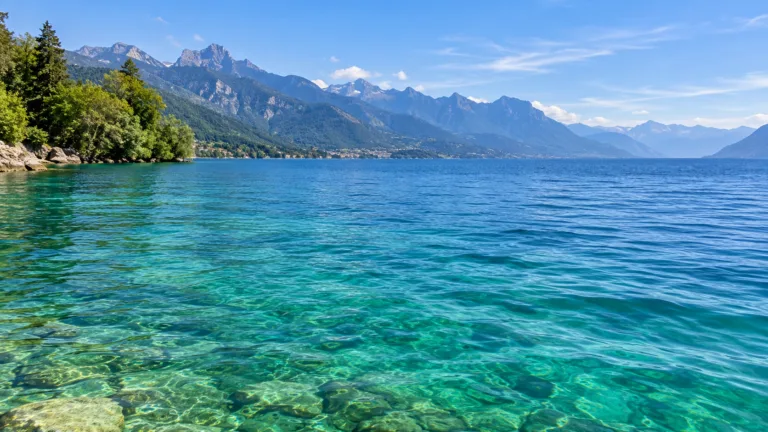
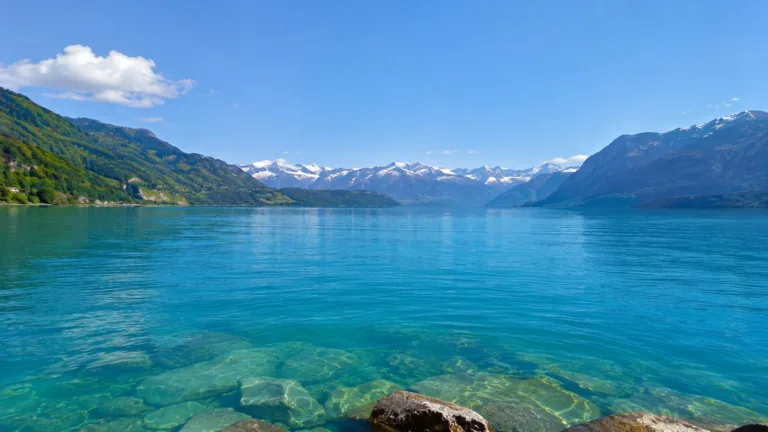
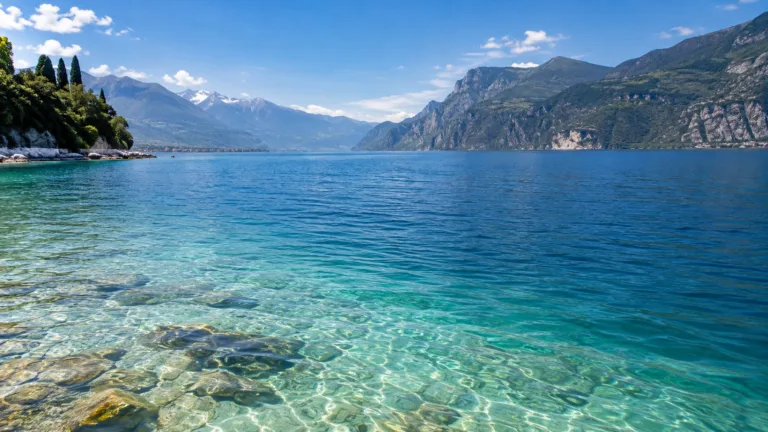
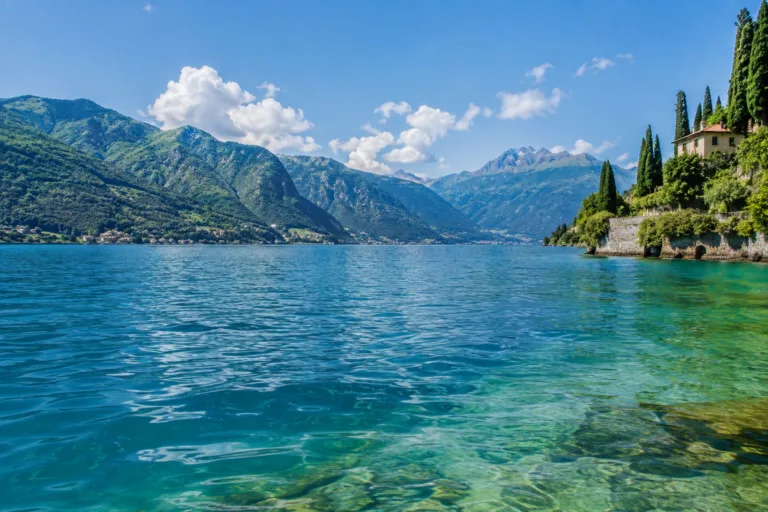
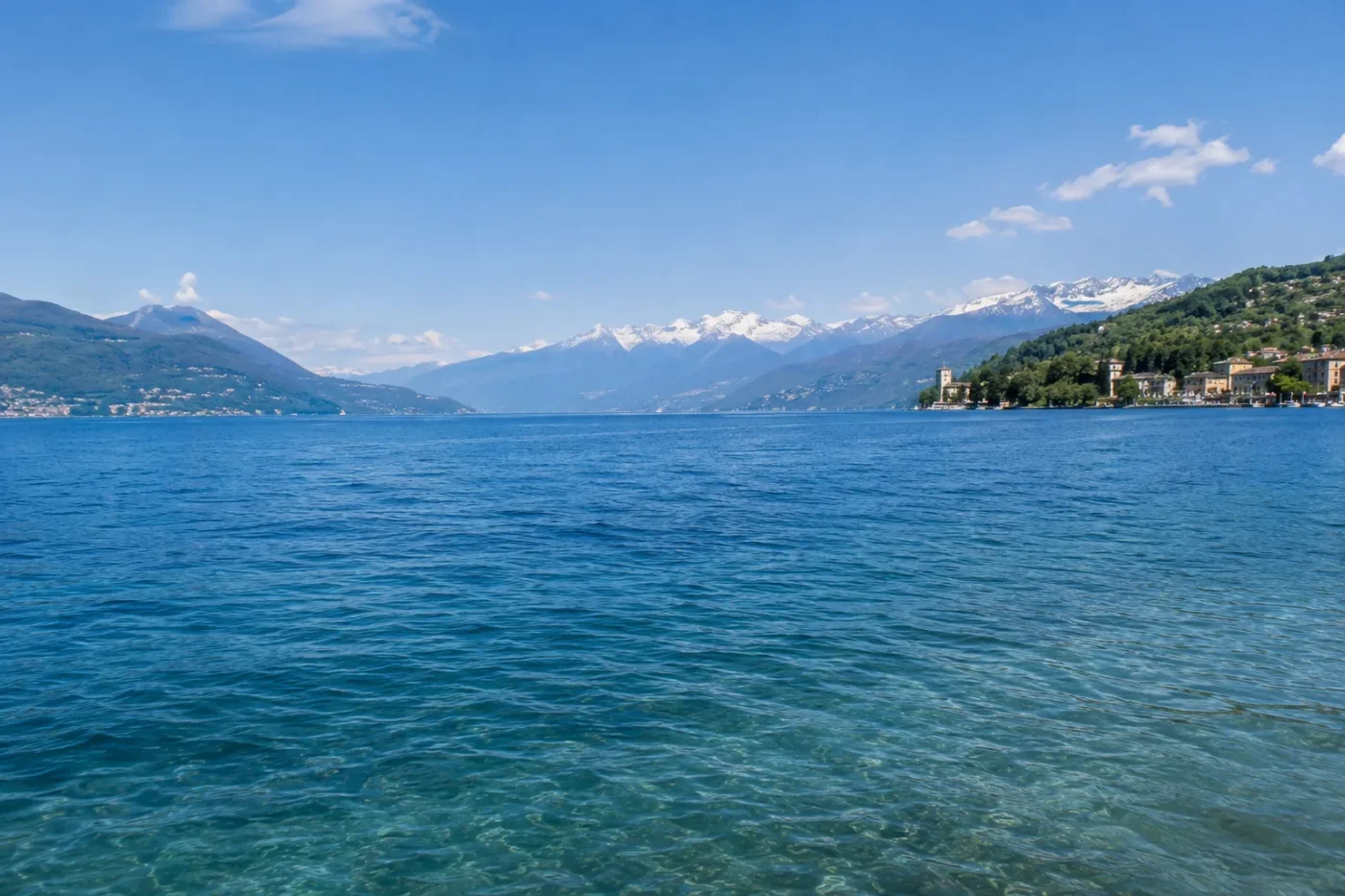
Lake Maggiore is primarily a blue lake, often reading as deeper blue across open water and shifting toward blue-green where local optical conditions change. Its appearance is linked to clear-water optics rather than a distinctive dissolved mineral pigment: scientific measurements describe pelagic water with low reflectance, relatively little suspended material and generally modest concentrations of substances that strongly alter visible color.
Why Lake Maggiore Usually Looks Blue
Lake Maggiore is a deep subalpine lake with a large volume of open water. In clear parts of the lake, light can penetrate well below the surface before being absorbed or scattered. Water itself absorbs longer red and orange wavelengths more strongly, while shorter wavelengths contribute more to the light returned toward an observer. That favors a blue appearance when suspended particles, dissolved colored material and phytoplankton are present at relatively low concentrations.
Optical measurements provide unusually useful evidence for this interpretation. A Lake Maggiore remote-sensing study analyzed more than 60 in-situ reflectance spectra collected through different seasons. The spectra were described as typical of transparent, low-nutrient lake water. Researchers reported low reflectance associated with small amounts of suspended particulate matter, together with spectral characteristics indicating low concentrations of colored dissolved organic matter and chlorophyll-a.
This also explains why Lake Maggiore should not be treated like a glacier-fed turquoise lake whose color is dominated by abundant suspended rock flour. The characteristic open-water appearance is closer to clear blue, while greenish or lighter tones can emerge when biological material, particles, shallow-water effects or surface reflections make a larger contribution to the light reaching the eye.
Rain and Phytoplankton Can Mute the Blue
The lake does not maintain the same optical appearance every day. CNR-IRSA monitoring for CIPAIS measured an annual mean Secchi transparency of 6.9 m in 2024, down from 7.9 m in 2022 and 8.3 m in 2023. The report connects much of the 2024 reduction with periods of heavy precipitation, which can increase turbidity and also supply nutrients that affect biological production.
The contrast within that single year was large. Secchi transparency reached 11.5 m in January and 10 m in December, while it fell to 4.5 m in April and 4 m in July. September and November also remained at or below 5 m. These figures measure visibility through the water rather than hue, so they should not be converted into invented monthly color values. They do show when the optical conditions behind a clear blue appearance were stronger or weaker.
Phytoplankton adds another layer of variation. The 2024 annual mean chlorophyll-a concentration was 3.9 µg/L, while the monthly value at the pelagic Ghiffa station reached 8.9 µg/L in November. Small cyanobacteria were concentrated mainly in summer and late summer, although their development remained modest that year. Higher algal abundance can absorb and scatter additional wavelengths, making a clear blue surface appear less saturated or more green-toned in affected water.
The Same Lake Can Show Different Optical Conditions at the Same Time
Lake Maggiore’s large size makes a single color label especially incomplete. Satellite monitoring has shown measurable spatial differences in transparency. During the well-documented summer 2011 phytoplankton episode, the central pelagic zones were generally clearer than some other portions of the lake.
That event also showed how rapidly biological conditions can alter the visual character of the water. A chlorophyte bloom developed in June and reached its peak around mid-July. From August, transparency generally increased again, although some portions of the lake remained much less transparent. The event is useful evidence of what Lake Maggiore can do, but it is not a permanent June-to-July color schedule: later monitoring shows that phytoplankton succession varies from year to year with weather, temperature, stratification and nutrient conditions.
A Secchi disk records how far into the water an observer can see. Chlorophyll measurements track algal pigment. Neither measurement by itself provides an exact visual color such as an RGB, HEX or dominant-wavelength value, so Lake Maggiore’s blue and blue-green palette should be read as a supported visual classification rather than a laboratory color code.
Why Photographs of Lake Maggiore Do Not Always Match
A photograph can make the lake look dark navy, medium blue, blue-green or locally much lighter without proving that the whole water body has undergone a chemical color change. Sun angle, cloud cover, reflected sky and surrounding mountains influence the surface seen by a camera. Water depth and the amount of bottom contribution can matter close to shore, while wind changes the geometry of surface reflections.
Real changes in the water occur at the same time. Suspended particles alter scattering, colored dissolved organic matter changes absorption, and phytoplankton pigments reshape the reflectance spectrum. Rainfall can therefore produce a genuine reduction in transparency while lighting conditions simultaneously change how that reduction appears in a photograph.
The most defensible description is consequently not a single immutable shade. Lake Maggiore has a blue-dominant open-water identity, with blue-green variation and temporary loss of clarity where biological production, rainfall-driven turbidity or local water conditions become more influential.
Long-Term Change Matters to the Color Story
Lake Maggiore recovered from the heavy nutrient enrichment that affected it during the twentieth century, and long-running monitoring now records relatively low nutrient and chlorophyll conditions compared with its eutrophication period. That history helps explain why the modern lake is generally associated with transparent blue water rather than the persistent green appearance expected from a highly productive lake.
The system is still changing. Recent CIPAIS monitoring shows warmer water, stronger thermal stability and reduced deep mixing. Those processes influence the distribution of nutrients, oxygen and plankton through the water column. They do not translate directly into one new lake color, but they can change the timing, depth and intensity of biological events that eventually influence transparency and surface reflectance.
For Lake Maggiore, color is therefore best understood as the visible result of a clear-water baseline modified by biological activity, suspended material, weather and viewing conditions. The measured evidence supports blue as the primary visual category while leaving room for genuine blue-green and lower-clarity states rather than forcing every observation into one fixed shade.
Sources
- CNR-IRSA / CIPAIS 2022–2024 Limnological Report
- Journal of Limnology — Optical Remote Sensing of Lake Maggiore
- Italia.it — Piedmont Itinerary Featuring Lake Maggiore
- DEIMS-SDR — Lake Maggiore Secchi Transparency Dataset
- Swiss Federal Office for the Environment — Lago Maggiore Record
- OpenStreetMap — Lago Maggiore Relation 11758