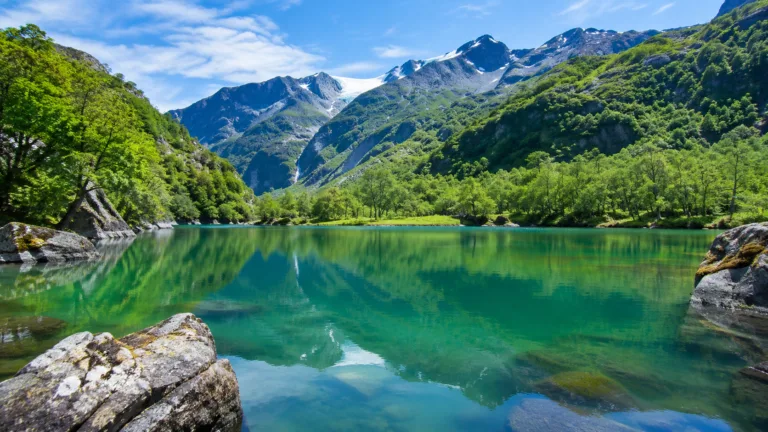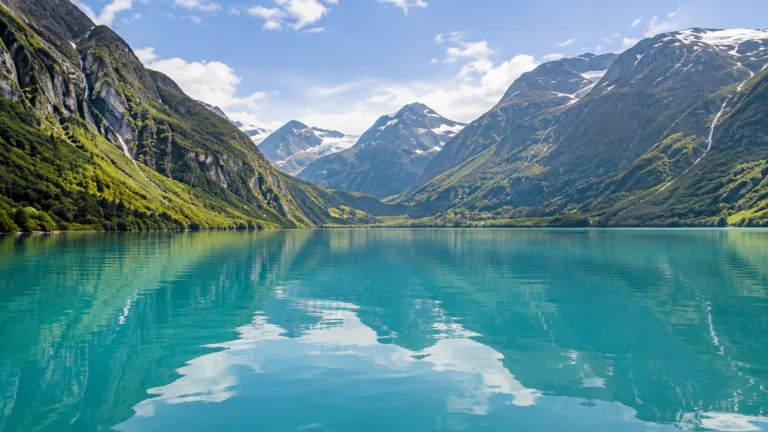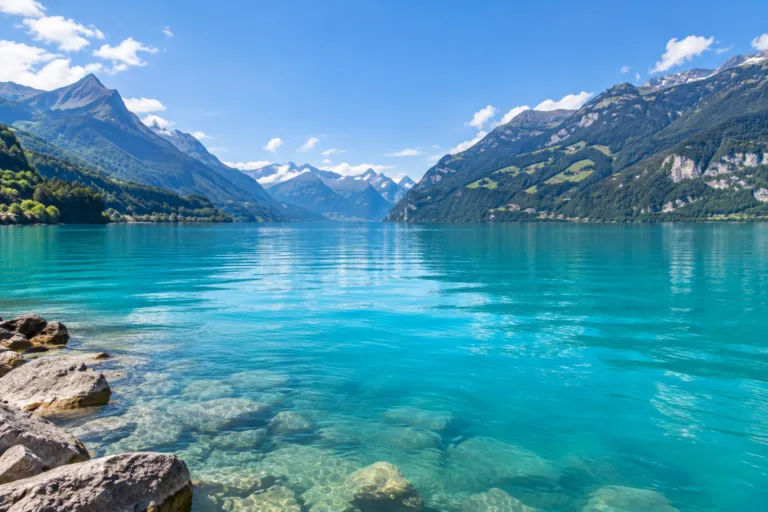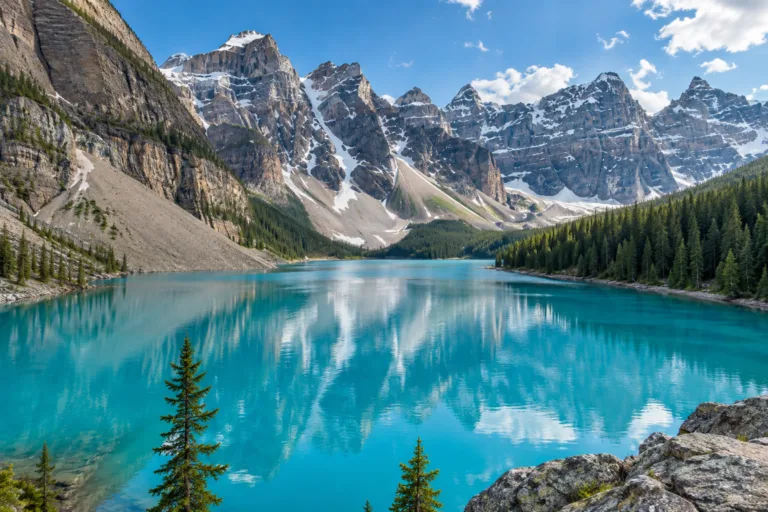
Turquoise
Primary visual colorWhere Is Lago Pehoé?
Magallanes and Chilean Antarctica Region · Chile
Drag or zoom the real map. Verified shoreline geometry is highlighted with the lake’s LakeColors palette color when available.
Lago Pehoé on the Globe
Rotate the world or focus directly on the lake.
What Supports the Pehoé Color Profile
Claim-level supportChile's official tourism authority describes Pehoé among the turquoise lakes of Torres del Paine.
Chile Travel — Torres del PaineChile Travel — Colorful Landscapes of Chilean National ParksEvidence: HighThe official tourism source links the turquoise color of Pehoé and Nordenskjöld to suspended rock particles created by glacier abrasion.
Chile Travel — Colorful Landscapes of Chilean National ParksEvidence: ModerateThe government basin report maps the Paine River from Lake Nordenskjöld into Lago Pehoé.
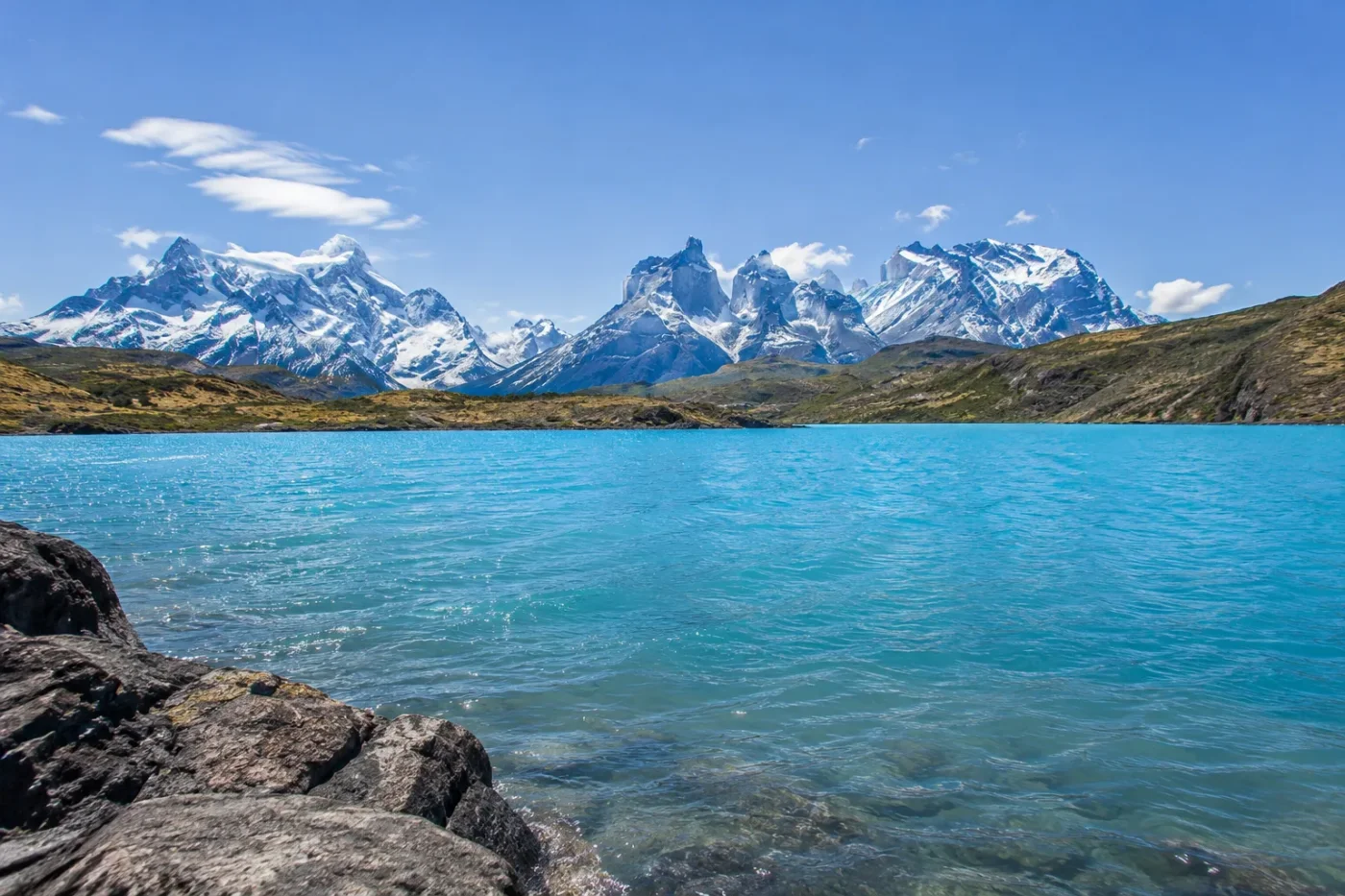
Chile Ministry of Public Works / DGA — Serrano River BasinEvidence: HighLago Pehoé is best described as turquoise. Chile’s official tourism authority repeatedly identifies Pehoé with the turquoise lakes of Torres del Paine and attributes this color to fine rock particles produced by glacial erosion and held in suspension. The documented evidence supports a persistent turquoise color identity, but it does not establish a separate month-by-month color cycle for the lake.
Why Pehoé Looks Turquoise
The turquoise appearance is linked to very fine mineral material generated when moving glacier ice abrades rock. This material, commonly described as glacial or rock flour, can remain suspended rather than immediately settling to the lake bed.
Suspended mineral particles change the optical behavior of the water by scattering incoming light. In a glacier-influenced lake such as Pehoé, this can strengthen blue-green wavelengths in the light returning from the water and produce the characteristic turquoise appearance documented by Chile Travel.
This explanation is more specific than saying the lake is blue because it contains minerals. The important feature is the presence of extremely fine particles suspended in the water column, together with the way those particles interact with light.
The Paine River Connects Pehoé to a Glacier-Influenced Lake System
Pehoé’s color also makes sense in its hydrological setting. Chile’s Dirección General de Aguas describes the Paine River as flowing from Lake Nordenskjöld into Lago Pehoé. The river reaches Pehoé after descending through Salto Grande, while the lake also receives the outlet of the smaller Lake Skottsberg.
Farther upstream, the same government basin description traces the Paine River system toward Lake Dickson, which is fed by Dickson Glacier. This connection provides a physical route through which finely eroded mineral material can move through the connected waters of the Paine basin before reaching Pehoé.
The hydrological evidence does not mean every suspended particle in Pehoé can be assigned to a single glacier or tributary. It does establish that Pehoé belongs to a connected water system with direct glacial influence, consistent with the official explanation for its turquoise color.
Clear Water and Glacial Particles Are Not Contradictory
Government and municipal descriptions characterize Lago Pehoé as having clear or crystalline water, while the official tourism explanation attributes its turquoise tone to suspended rock particles. These descriptions can coexist.
Glacial flour consists of particles fine enough to remain dispersed in water. The concentration and particle size can affect color without necessarily producing the brown or opaque appearance associated with coarse sediment. Pehoé can therefore retain a visually clear character while still containing enough fine mineral material to influence its color.
The Dirección General de Aguas gives the lake a surface area of about 22 km² and describes its irregular shoreline, placing the color phenomenon within a substantial, connected lake rather than a small isolated glacial pool.
Turquoise Is the Verified Color; Seasonal Recoloring Is Not
Photographs of Pehoé can range from pale aqua-like turquoise to darker blue-green appearances. Sun angle, cloud cover, reflections, surface roughness and viewing direction can all change how a turquoise water body looks at a particular moment. Such visual differences should not automatically be interpreted as a chemical or seasonal change in the lake itself.
The cited sources establish turquoise as Pehoé’s characteristic color but do not provide monthly optical measurements, dominant-wavelength records or a verified sequence in which the lake changes from one defined color to another during the year. For that reason, a twelve-month color calendar would imply more precision than the available Pehoé-specific evidence supports.
Pehoé is therefore better treated as a lake with a stable documented turquoise identity and short-term optical variation rather than a lake with a proven seasonal color transformation.
What Makes Pehoé’s Color Distinctive
The strongest evidence connects three features: a turquoise visual identity documented by Chile’s tourism authority, fine rock particles generated by glacial erosion, and a hydrological connection through the Paine River and Lake Nordenskjöld. Together, these explain why Pehoé belongs to the blue-green family of glacier-influenced Patagonian lakes.
The lake’s color should not be reduced to reflected sky alone. Reflection can alter the surface appearance, but the documented mineral-particle mechanism helps explain why Pehoé retains a pronounced turquoise character across different viewpoints and lighting conditions.
Sources