Milky Turquoise
Primary visual colorWhere Is Lago di Sorapis?
Veneto, Province of Belluno · Italy
Drag or zoom the real map. Verified shoreline geometry is highlighted with the lake’s LakeColors palette color when available.
Lago di Sorapis on the Globe
Rotate the world or focus directly on the lake.
Late-Season Water Loss Shrinks the Turquoise Footprint
By late summer and into the later hiking season, the lake level can fall sharply. The visible area of turquoise water can therefore contract even though the suspended-rock-flour mechanism remains the same.
How Specific Is the 'Dolomite Rock Flour' Label?
The lake-specific official description identifies very fine rock dust carried by the Sorapis glacier. The wider Dolomites are a classic landscape developed in dolomitic limestone. 'Dolomite rock flour' is therefore a useful geological shorthand here, but it should not be read as a lake-specific mineralogical assay proving that every suspended grain is mineral dolomite.
The Sorapiss Glacier System Is Still Changing
1980s–2023A 2025 study in The Cryosphere included Sorapiss Occidentale among nine studied Dolomite glaciers. Across those nine glaciers, mapped area declined from 4.11 to 1.81 km² between the 1980s and 2023. The study documents glacier change rather than Lake Sorapis optical color, so it is catchment context, not a direct color measurement.
Value: Sorapiss Occidentale
Value: −56% across nine studied Dolomite glaciers
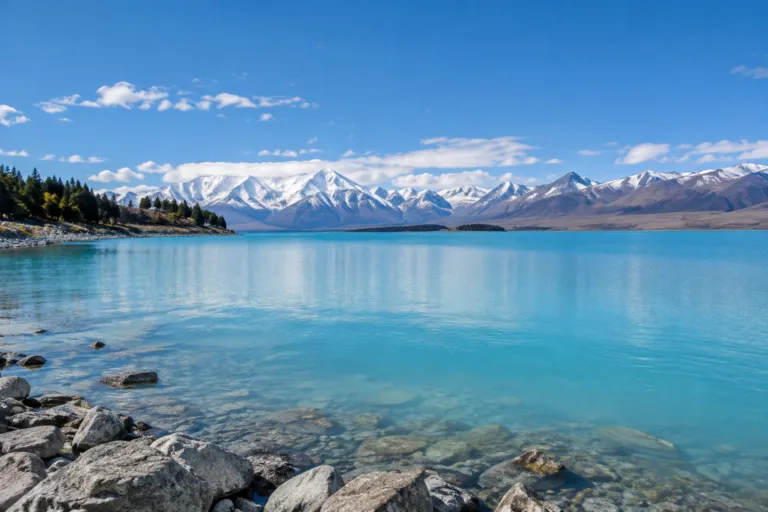
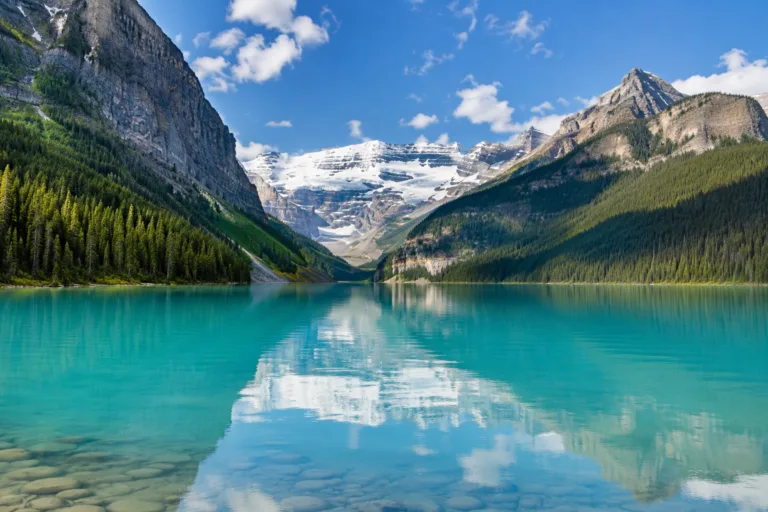
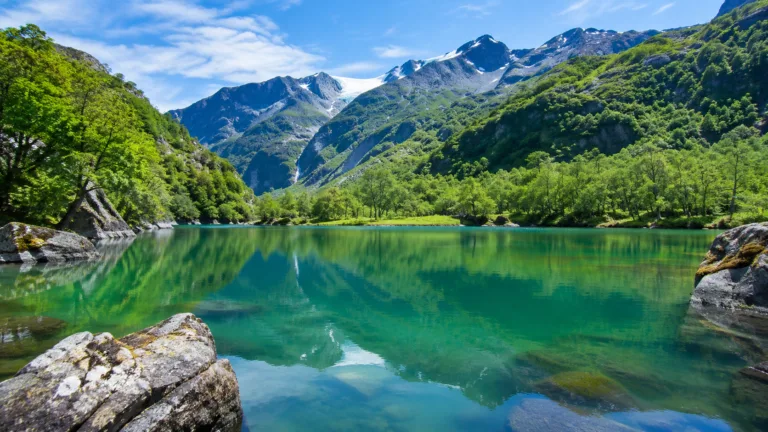
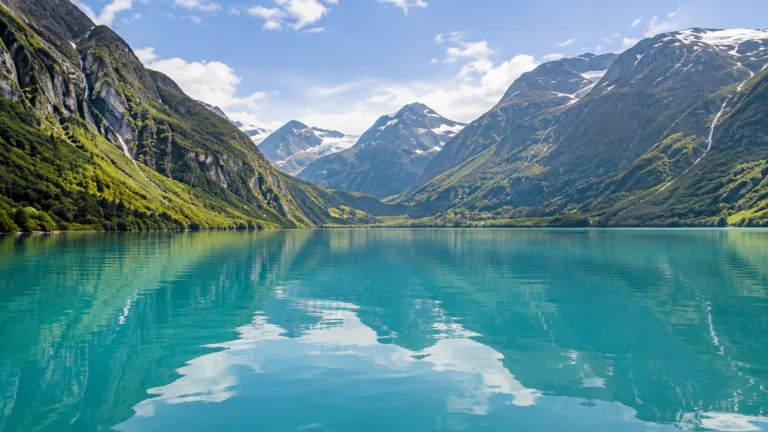
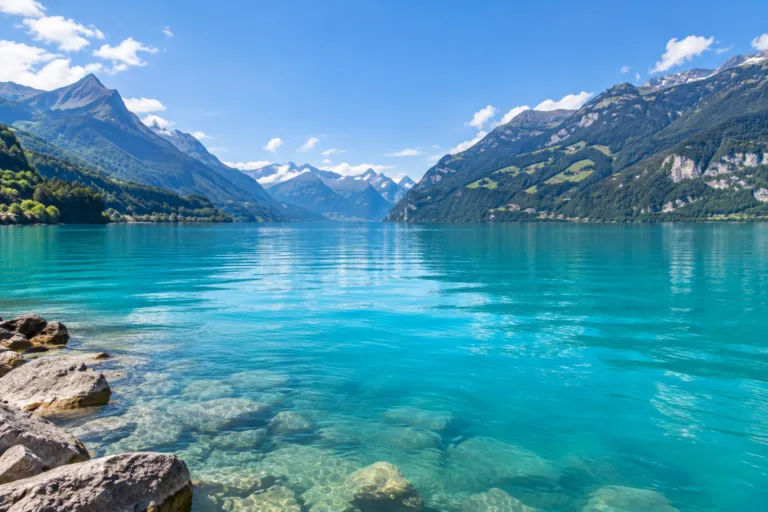
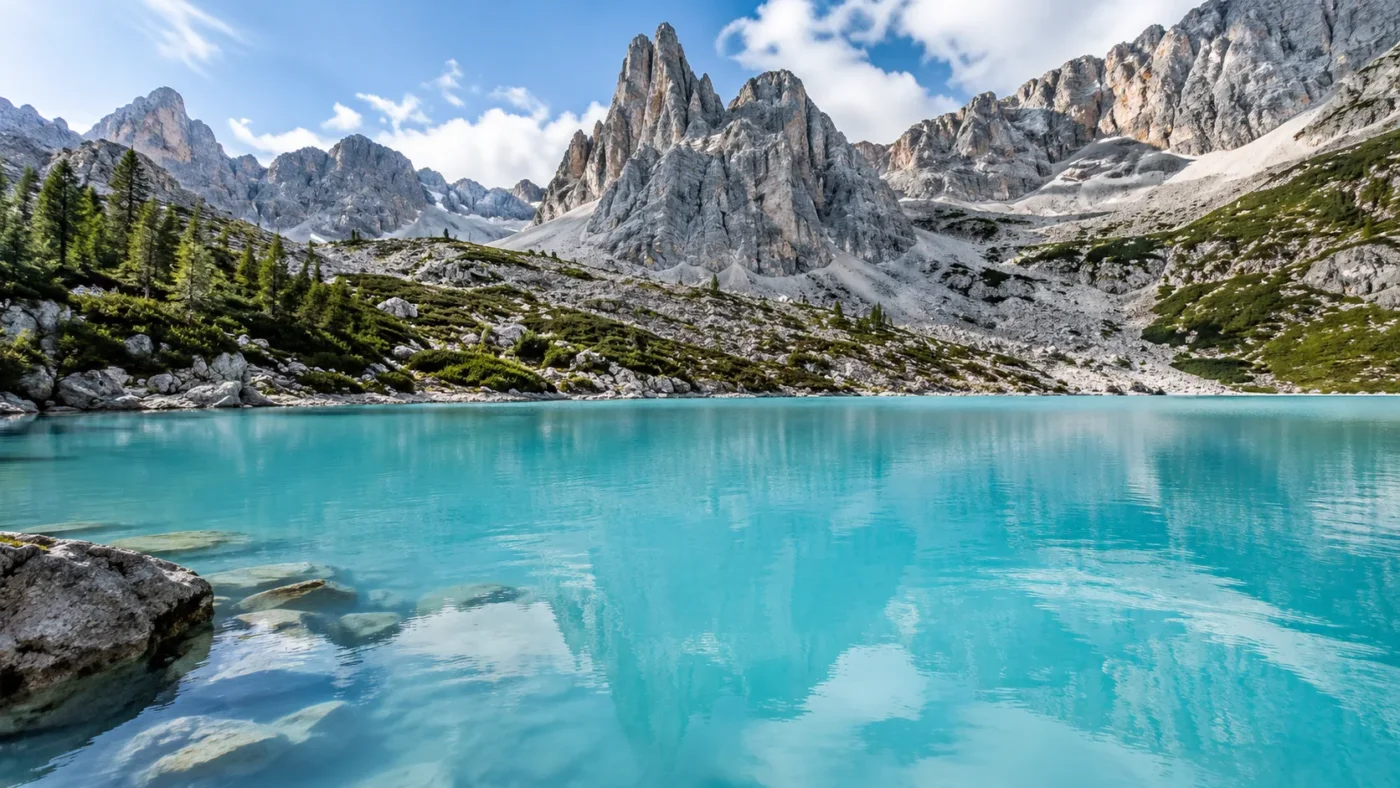
Lake Sorapis is best known for an opaque, milky turquoise appearance rather than the transparent dark blue typical of many alpine lakes. The color is linked to extremely fine rock material delivered by meltwater from the Sorapis glacier system, with the suspended particles altering how sunlight is absorbed and scattered through the water. Official descriptions also record blue and aqua-green shades, so the lake is better understood as a blue–green glacial color system than as a single fixed turquoise tone.
Why Sorapis Looks Milky Instead of Clear Blue
The official Cortina Dolomiti description attributes the lake’s intense blue-to-aqua-green coloration to very fine rock dust carried down by the Sorapis glacier. During spring and summer melting, water transports this finely divided mineral material into the basin.
The small grain size is central to the appearance. Fine glacial sediment can remain suspended in the water column rather than settling rapidly to the bottom. A high concentration of suspended particles makes the water visually opaque or milky, which is why rocks beneath deeper parts of Lake Sorapis are often hidden even when the surface is brightly illuminated.
The optical mechanism is consistent with the process described by NASA for turquoise glacier-fed lakes. Glaciers mechanically pulverize bedrock into fine silt- and clay-sized material. When that material remains suspended, the particles and the water interact with different parts of incoming sunlight so that blue and green wavelengths become prominent in the light returned to an observer.
The turquoise is therefore not a dissolved blue pigment. It is an optical result of water, suspended mineral sediment and sunlight acting together. This also explains why a lake rich in pale or gray rock flour can produce water that looks intensely blue-green.
What “Dolomite Rock Flour” Means at Sorapis
“Dolomite rock flour” is commonly used to describe the sediment behind the Sorapis color, but the wording deserves a precise interpretation. The lake-specific Cortina source identifies the material as very fine rock dust transported by the Sorapis glacier; it does not provide a mineral-by-mineral analysis of the suspended sediment.
The broader geological setting supports the association with dolomitic material. The Dolomites UNESCO Foundation describes the mountain region as a classic landscape developed in dolomitic limestone and other carbonate formations. Glacial erosion within this terrain can therefore generate carbonate-rich fine sediment that is carried downslope with meltwater.
For Lake Sorapis, “dolomite rock flour” is useful as a geological description of the source environment, but it should not be treated as evidence that every suspended particle has been laboratory-confirmed as the mineral dolomite. The strongest lake-specific claim is narrower: very fine glacier-transported rock dust produces the characteristic coloration.
The Strongest Turquoise Is Tied to the Meltwater Season
The Sorapis color is connected to an active seasonal water supply. Cortina’s official description states that the glacier melts during spring and summer and that this meltwater feeds the lake while carrying the fine rock material responsible for its blue and aqua-green appearance.
A more detailed seasonal description places the strongest milky turquoise from roughly late June into early August. This period coincides with strong meltwater input from remaining snow and ice. The timing should be treated as an observed seasonal pattern rather than a fixed annual chemical threshold: snowpack, temperature and melt conditions vary between years.
The late-June-to-early-August window describes the commonly documented visual peak. It is not a published month-by-month spectrophotometric record, so Lake Sorapis should not be assigned invented wavelength, RGB or exact color values for those months.
By later summer, another change can become more important than hue alone: the amount of water in the basin may decline substantially. A smaller lake surface means a smaller visible turquoise area, even where the remaining water retains the same suspended-sediment color mechanism. Photos from different dates can therefore differ because both color intensity and water extent are changing.
Underground Drainage Makes the Water Level Unusually Dynamic
Lake Sorapis has no visible surface outlet. According to the official Cortina description, water reaches the rocky threshold of the glacial shelf underground before emerging farther down the mountain at the waterfall known as “el Piss.”
This matters for interpreting photographs of the lake. Sorapis is not a basin whose visible level is controlled only by a stream flowing in and another stream flowing out across the surface. Its water extent reflects the balance between meltwater entering the basin and water leaving through the subsurface drainage system.
That balance helps separate two different kinds of change. A reduction in lake area is a hydrological change, while a shift between blue, aqua green and milky turquoise is a visual or optical change. They can occur together, but they are not the same phenomenon.
The Sorapiss Ice Feeding This Landscape Is Changing
Recent glacier research adds an important time dimension to the lake’s setting. A 2025 study in The Cryosphere examined remaining glaciers across the Dolomites and included Sorapiss Occidentale in its detailed reconstructions. Across the nine glaciers analyzed in the study, mapped glacier area declined from 4.11 km² in the 1980s to 1.81 km² in 2023, a reduction of about 56%.
Sorapiss Occidentale itself has a more complicated recent history than a simple, uniform retreat. Parts of it are debris-covered, and the study documents strong local topographic influences on its behavior. This is relevant because Lake Sorapis depends on a mountain environment where ice, snow, rock debris and meltwater supply are changing together.
The glacier study does not measure Lake Sorapis water color, suspended-sediment concentration or future turquoise intensity. A shrinking or reorganizing glacier system can alter meltwater and sediment delivery, but the available evidence does not justify converting regional glacier-loss figures into a specific forecast for the lake’s future color.
Sources